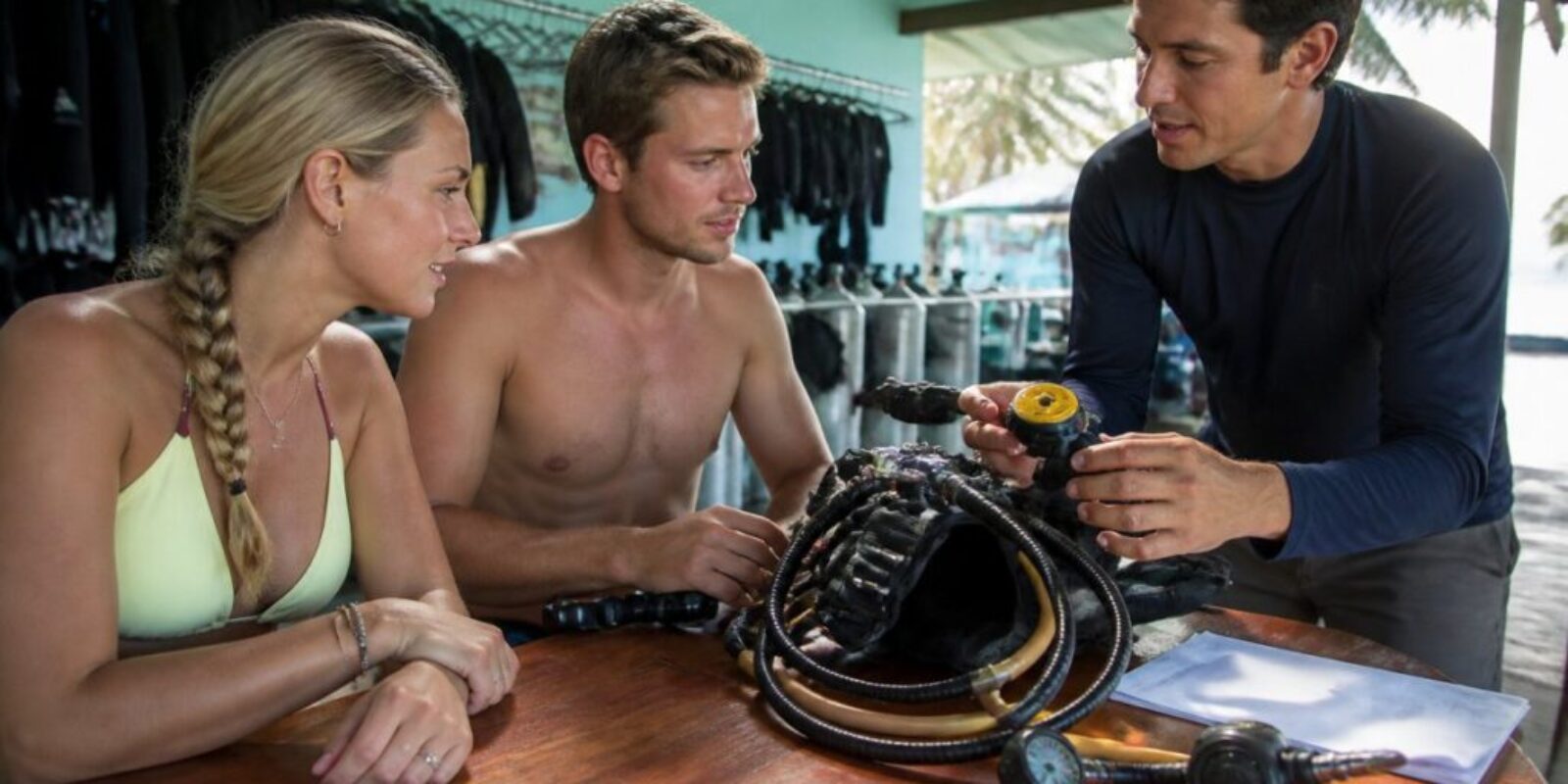
Last Updated: November 1, 2026
Resumen rápido
No, scuba certification is not needed to get underwater in Cozumel. Certification is not a legal requirement to enter the water, but it is an operator requirement to dive independently. Without a card, you can helmet dive with no training or do a supervised Discover Scuba Diving session with an instructor beside you.
- Helmet diving lets you walk the seafloor with no card, no training, and no swimming skills.
- Discover Scuba Diving includes a briefing, shallow-water skills check, and a guided reef dive.
- A PADI Open Water course typically takes 3 to 4 days, or 2 days on site with a referral.
- Only an instructor can certify you; a divemaster is not the same as an instructor.
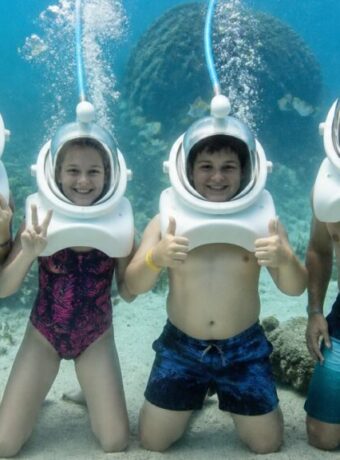
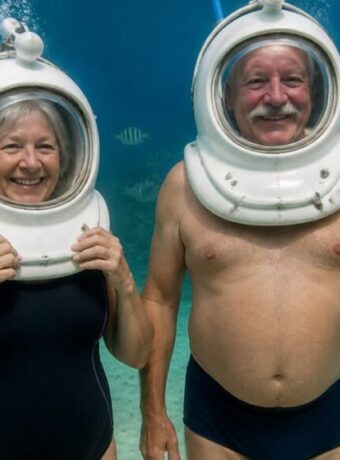
- Helmet diving welcomes ages 8 to 80+, so grandparents and grandkids can go together.
Tabla de contenido
- Is Scuba Certification Needed for Cozumel Diving?
- Cozumel Scuba Diving Without Certification: What You Can Actually Do
- Cozumel Discover Scuba Diving: A Supervised First Dive
- PADI Open Water Certification in Cozumel: The Full Path
- Cozumel Underwater Helmet Diving: Walk the Seafloor Without Training
- How to Choose Your Cozumel Dive Experience: A Decision Guide
- Book Your Cozumel Underwater Adventure with SEA TREK
- Preguntas frecuentes
Is Scuba Certification Needed for Cozumel Diving?
No, you do not need a scuba certification card to get underwater in Cozumel. You can walk the seafloor in a helmet with zero training. But the answer depends on what kind of diving you mean, and that distinction is where most guides get vague.
Here is the authoritative version: certification is not a legal requirement to enter the water. It is an operator requirement to dive independently. Those are two different things, and they are enforced by two different parties.
What operators enforce.
So who needs what?
- Everyone: can helmet dive with no card and no prior training.
El Professional Association of Diving Instructors sets the training standards most operators follow, and the Divers Alert Network on dive safety and medical screening publishes the medical guidance operators use for screening. Dive shops enforce those standards as a business condition, not because a local ordinance requires it.
Conclusión principal
Certification is not a legal gate to the water. It is the operator’s condition for letting you dive unsupervised. If you want to rent gear and explore on your own, you need a card. If you are happy to dive with a professional beside you, you do not.
Certification is not a legal gate to the water. It is the operator’s condition for letting you dive unsupervised. If you want to rent gear and explore on your own, you need a card. If you are happy to dive with a professional beside you, you do not.
You can still get underwater and see the reef with a trained guide keeping you safe.
Cozumel Scuba Diving Without Certification: What You Can Actually Do
Cozumel scuba diving without certification is real, and it comes in three flavors. Each one gets you underwater without a training card.
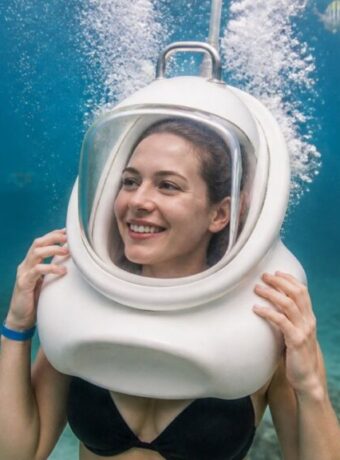
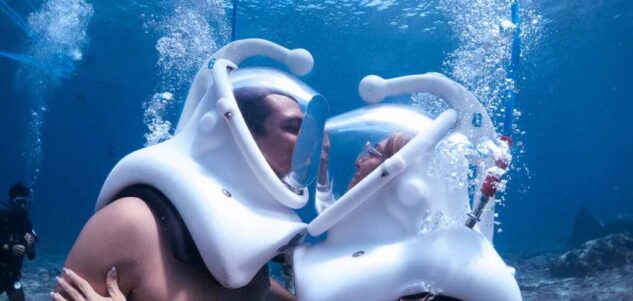
Helmet diving. You wear a specially designed helmet, breathe normally, and walk the seafloor. No tank on your back, no regulator in your mouth.
Helmet diving works for first-time divers, non-swimmers, and families.
Cozumel Discover Scuba Diving: A Supervised First Dive
Discover Scuba Diving is the closest thing to a real scuba dive without a card. An instructor teaches you a few basics, then takes you into shallow water.
What happens on the day:
- A short briefing on gear and breathing.
- A skills check in calm, shallow water.
- A guided dive on a shallow reef, with the instructor beside you.
The whole thing usually takes a few hours, depending on the operator, with a professional beside you the entire time.
What it does qualify you for: nothing on its own. You cannot dive independently after one session.
What it does not do: replace a certification course. Some agencies let you apply the session toward Open Water training later, so ask before you book.
Watch out: if you have a medical condition, most operators require a physician’s sign-off before you get in the water. Sort that out before you arrive, not at the dock.
PADI Open Water Certification in Cozumel: The Full Path
PADI Open Water certification is the standard card for independent diving. It is the course most first-time divers choose, and it opens the door to boat dives, reef dives, and rental gear without an instructor holding your hand.
The course has three parts, and understanding how they fit together is what lets you choose between training at home and training on site:
- Online theory or e-learning. You study at your own pace before you travel, typically 6 to 12 hours of reading, videos, and knowledge reviews, ending with a final exam.
- Confined-water dives. Skills practice in shallow, pool-like water, usually 5 confined-water sessions covering gear assembly, mask clearing, regulator recovery, buoyancy control, and emergency skills.
- Open-water dives. Four real dives at a dive site with your instructor, applying those skills in open water.
How long it takes. A full Open Water course typically takes 3 to 4 days, depending on the operator’s schedule and how much theory you complete before arrival. A referral lets you do theory and confined-water work at home, then finish the four open-water dives in Cozumel, usually 2 days on site. That is the format most cruise passengers and short-stay visitors choose, because it preserves vacation time.
What each price should include. Ask specifically whether the quote covers rental gear (BCD, regulator, wetsuit, mask, fins), tank fills, boat fees, the certification card, and any marine park or dock fees. Some operators quote a low base price and add gear or boat fees separately, the total is what matters.
- Confirm the instructor’s credential. Ask for the instructor’s name and certification number, and confirm they hold a current instructor rating with a recognized agency (PADI, SSI, NAUI, SDI). A divemaster is not the same as an instructor, only an instructor can certify you.
- Confirm the course is a recognized certification, not a resort course or introductory dive dressed up as training. Ask which agency card you will receive at the end.
- Ask about group size. Smaller ratios mean more supervision. Ask how many students per instructor in confined and open water.
- Confirm what is included, gear, boat fees, materials, card, and any marine park fees, so the final price is not a surprise.
- Ask about language. If you are not fluent in the instructor’s language, confirm instruction and materials are available in yours.
- Confirm insurance and medical screening. Ask what medical questionnaire is required and whether a physician’s sign-off is needed for any condition you have.
El Divers Alert Network on dive safety and medical screening recommends a medical questionnaire before any training. Fill it out honestly. A “yes” answer usually just means a doctor signs off, it does not automatically disqualify you.
Consejo profesional
If you are training on a short trip, book the referral format: complete theory and confined-water skills at home, then finish your four open-water dives on site. You get the same card with less vacation time spent in a classroom.
If you are training on a short trip, book the referral format: complete theory and confined-water skills at home, then finish your four open-water dives on site. You get the same card with less vacation time spent in a classroom.
Cozumel Underwater Helmet Diving: Walk the Seafloor Without Training
Helmet diving is a simple way to get underwater in Cozumel. You wear a specially designed helmet, breathe naturally, and walk on the ocean floor. No swimming, no floating, no certification.
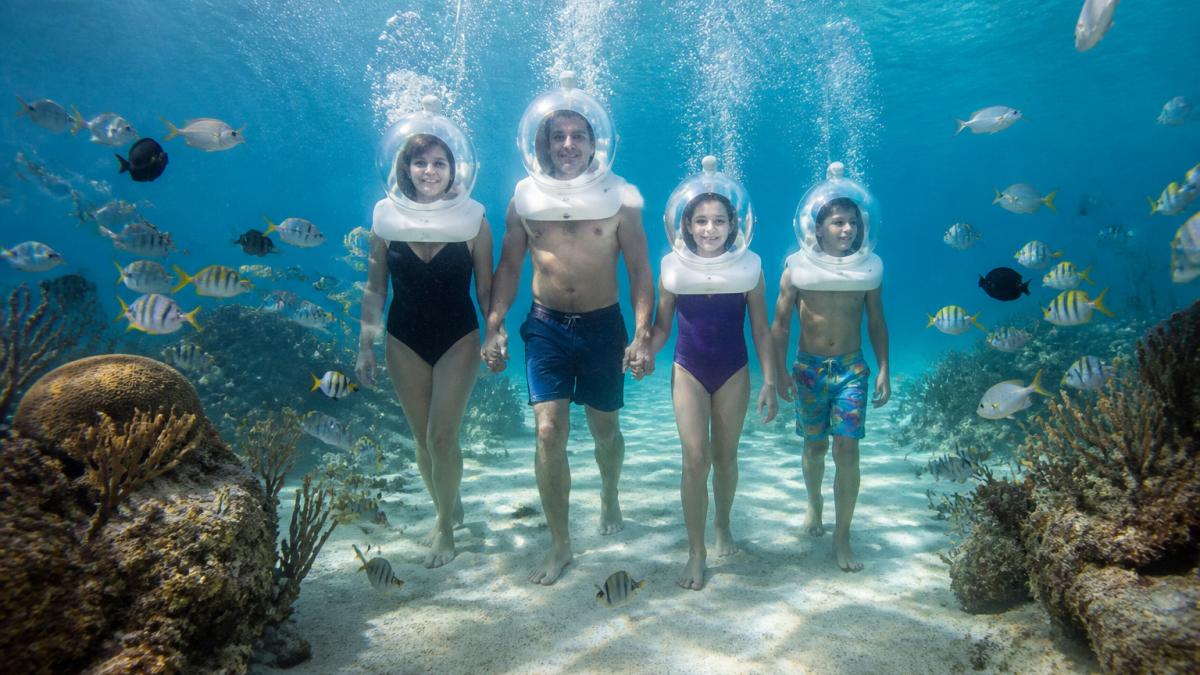
Here is why it works for almost everyone:
- No swimming skills needed. You stand and walk.
- No scuba certification or training. A guide briefs you on land, then walks you down.
- Ages 8 to 80+. Grandparents and grandkids can go together.
- Natural breathing. Air flows into the helmet, so you never hold a regulator.
At SEA TREK Cozumel, we run this as a guided tour near the cruise ports. All equipment is provided on site, and your booking includes free entrance to Jeanie’s Beach Club. It is a hassle-free option for cruise passengers with a few hours in port.
If you are weighing helmet diving against a first scuba dive, our complete guide to why helmet diving is worth it covers safety, non-swimmer tips, and what to expect. You can also Caminata por el fondo del océano en Cozumel and book your spot directly.
How to Choose Your Cozumel Dive Experience: A Decision Guide
Pick based on three things: your comfort in water, your time in port, and whether you want a skill for life.
| Your situation | Best option | Time needed | Certification after? |
|---|---|---|---|
| Nervous, non-swimmer, or with kids and seniors | Buceo con casco | A few hours | No |
| Curious but unsure about scuba | Discover Scuba Diving | A few hours | No |
| Want to dive independently later | PADI Open Water | Multiple days | Sí |
| Short on time but want a card | Scuba Diver course | Shorter than Open Water | Partial |
| Only have a surface-level window | Esnórquel | Under an hour | No |
Ask yourself these questions:
- Can everyone in my group swim? If not, helmet diving keeps the family together.
- How long are we in port? A full course will not fit a short cruise stop.
- Do I want a one-time memory or a new hobby? That answer points you to the right row.
For quick answers on age limits, weight limits, and booking, see our frequently asked questions. To compare every underwater option side by side, our guide to the best underwater activities in Cozumel lays them out for non-swimmers and families.
Book Your Cozumel Underwater Adventure with SEA TREK
The water is warm, the reef is close, and you do not need a certification card to see it.
If your group spans ages and swimming abilities, helmet diving keeps everyone together. We are a locally owned and operated family business, and this is the experience we built for cruise passengers and multi-generational families: all equipment on site, a guided walk on the ocean floor, and free entrance to Jeanie’s Beach Club.
Get started with SEA TREK Cozumel and give your family an underwater memory that needs no training, no swimming skills, and no certification. You can also complete the required medical waiver online before you arrive for a smooth check-in.
Preguntas frecuentes
Do you need scuba certification to dive in Cozumel?
No, you do not need scuba certification to experience Cozumel’s underwater world. You can also choose helmet diving, which requires no certification, no swimming skills, and no prior training.
Can beginners scuba dive in Cozumel without a certification?
Beginners can get underwater in Cozumel without certification by choosing helmet diving, which requires no training. You can walk the ocean floor and see the reef on your first visit.
What is the difference between a resort dive and a certified scuba dive?
A resort dive, also called a Discover Scuba Diving experience, is a supervised introduction for uncertified divers. An instructor stays with you the entire time, limits depth, and handles most equipment decisions. A certified scuba dive means you hold a certification card, can plan and execute dives with a buddy, rent gear independently, and join boat dives without an instructor ratio requirement. Resort dives do not count toward certification, though some training agencies let you apply the skills practice if you enroll in a course within a set window.
Is Cozumel a good place for first-time divers?
Cozumel is one of the best places in the world for a first dive. The water is warm year-round, visibility often exceeds 100 feet, and currents are manageable in the shallow reef areas used for training. The reef system is part of a protected marine park with abundant coral and fish life. Many operators specialize in beginner and introductory programs, and the calm, clear conditions help new divers feel comfortable quickly.