Last Updated: October 30, 2026
Quick Summary
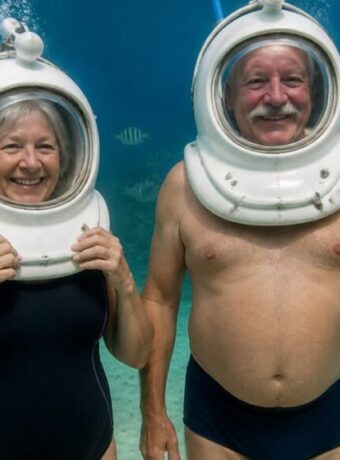
Yes, non-swimmers can go helmet diving. You walk on the seafloor and breathe normally through a sealed helmet while your head stays completely dry, so no swimming ability or scuba certification is required. Comfort with putting your head underwater is the real barrier, and helmet diving removes it.
- You climb down a ladder to waist depth, then walk down to the seafloor.
- The helmet rests on a collar or shoulder plate, not on your neck.
- Eligibility is set by the operator, not by a universal rule, so confirm before booking.
- Skip the dive if you are congested, have an ear infection, or cannot follow hand signals.
- At SEA TREK Cozumel, the experience is designed for ages 8 to 80+.
Table of Contents
- Can Non-Swimmers Really Go Helmet Diving?
- How Helmet Diving Works: Air, Weight, and Walking the Seafloor
- Helmet Diving vs Snorkeling: What You Actually Get for the Extra Effort
- What to Expect on a Helmet Dive, Step by Step
- Helmet Diving Safety: Supervision, Medical Limits, and Panic Plans
- Who Should Sit This One Out: Eligibility and Comfort Checks
- Booking Your Family’s Helmet Dive with SEA TREK Cozumel
- Frequently Asked Questions
Can Non-Swimmers Really Go Helmet Diving?
Yes. Non-swimmers can go helmet diving. The helmet diving experience is built for people who cannot swim, float, or tread water.
You walk on the seafloor. You breathe normally through a helmet. Your head stays dry the whole time.
Here is the part most guides get wrong: swimming skill is not the barrier. Comfort with putting your head underwater is. And helmet diving removes that barrier entirely, because your head never goes under. Building this foundational ease in the water often serves as a helpful precursor to formal swimming lessons for adults, ensuring that your time beneath the surface remains a source of curiosity rather than apprehension.
Below, we’ll show you exactly how the dive works, who should skip it, and what to check before you book.
How Helmet Diving Works: Air, Weight, and Walking the Seafloor
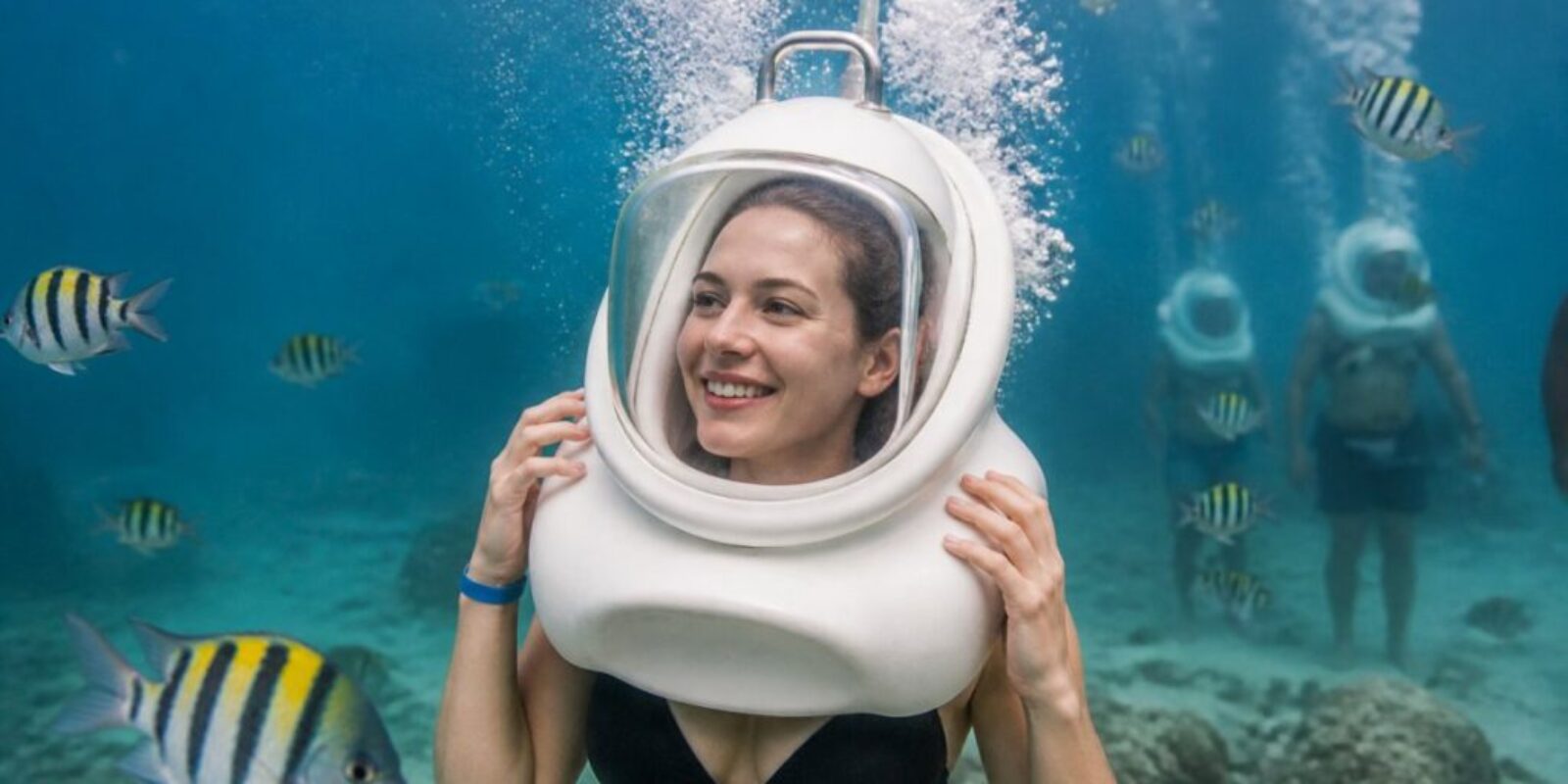
Helmet diving is a guided underwater walk where you breathe normal air inside a sealed helmet while your head and face stay completely dry. You walk on the ocean floor while breathing naturally.
Three things make it work:
No swimming ability or scuba certification is required. You can walk on the ocean floor while breathing naturally.
Helmet Diving vs Snorkeling: What You Actually Get for the Extra Effort
Snorkeling keeps you at the surface. Helmet diving lets you walk on the ocean floor while breathing naturally, exploring vibrant coral reefs and marine life.
What to Expect on a Helmet Dive, Step by Step
Here is the general sequence of a helmet dive, start to finish:
- Check in and gear up. Expect a briefing before you enter the water. Wear swimwear under your clothes; you will get wet from the waist down.
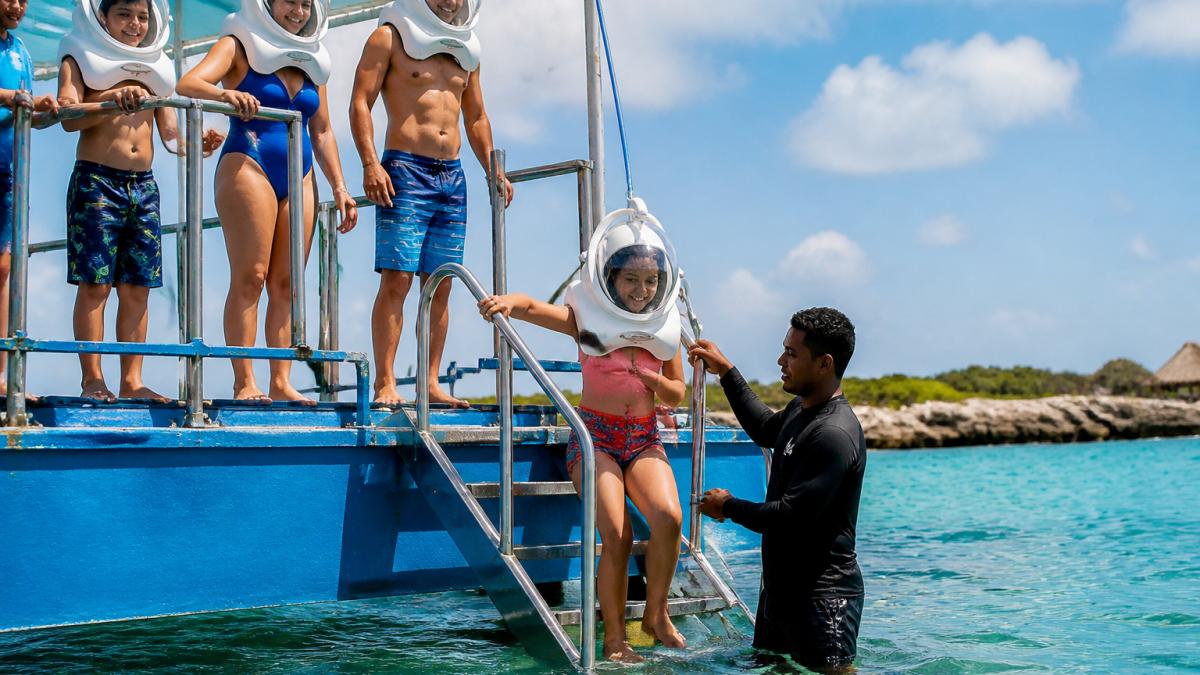
- Enter the water. You climb down a ladder to waist depth.
- Helmet on. The guide sets the helmet on your shoulders and checks the seal. The helmet rests on a collar or shoulder plate, not on your neck, and air begins flowing before your head is fully enclosed. You can still hear the guide and see through the front window.
- Descend. You walk down the ladder to the seafloor, breathing normally.
- Walk the reef. The guide leads the group and points out marine life while you walk the reef.
- Return and exit. You climb back up the ladder. Your head stays dry throughout. The guide removes the helmet once you are at the surface.
Comfort details to ask about:
- Glasses. Most helmets have enough room to keep glasses on, but the lens can fog. Ask the operator whether they recommend removing them or using a defogger.
- Claustrophobia. The helmet is enclosed but the front window is large and you can see out in all directions. If you are prone to panic in tight spaces, tell the guide before you descend, they can keep you closer to the ladder.
- Communication. You cannot talk normally, but you can nod, give a thumbs-up, or use the agreed hand signals. The guide watches your face through the window.
- Hair and jewelry. Tie back long hair and remove dangling jewelry so the seal sits cleanly.
Pro Tip
Ask the operator before you book whether the dive site has a sandy entry and a handrail on the ladder. Those two details make the biggest difference for nervous first-timers and anyone with limited mobility.
Ask the operator before you book whether the dive site has a sandy entry and a handrail on the ladder. Those two details make the biggest difference for nervous first-timers and anyone with limited mobility.
If you want the full side-by-side on how this compares to staying at the surface, see our helmet diving vs snorkeling comparison for beginners.
Here is the sequence of a helmet dive from check-in to exit.
| Step | What to do |
|---|---|
| Check in and gear up | Briefing; wear swimwear under clothes |
| Enter the water | Climb down a ladder to waist depth |
| Helmet on | Guide sets helmet and checks the seal |
| Descend | Walk down the ladder to the seafloor |
| Walk the reef | Guide leads group and points out marine life |
| Return and exit | Climb back up; guide removes helmet at surface |
Helmet Diving Safety: Supervision, Medical Limits, and Panic Plans
Medical limits may apply, so check the operator’s medical questions and safety FAQ before you book.
Who Should Sit This One Out: Eligibility and Comfort Checks
Ask the operator about eligibility before you book. How to decide if helmet diving is safe for seniors covers age, health, and mobility checks for you or a family member. But here is the part most guides gloss over: eligibility is set by the operator, not by a universal rule. Age minimums, health questionnaires, and mobility requirements vary by dive site and by local regulations. Treat the list below as a starting point, then confirm the specifics with the operator before you pay.
The self-check:
- You can climb a short ladder without help
- You can walk a few steps on uneven ground
- You have no heart condition, pregnancy, or recent surgery
- You can breathe comfortably through your nose and mouth
- You are comfortable with your head staying dry underwater
Ask the operator about age requirements and any parental sign-off for minors when you book.
Medical disclosures. Answer any health questions honestly. If you are unsure whether a condition disqualifies you, ask the operator in writing before you book rather than deciding on the dock.
Accessibility and comfort. Helmet diving does not require swimming or scuba certification. Ask the operator about:
- Handrails and step height on the ladder
- Whether a guide can assist with balance on the seafloor
- Whether the helmet fits over glasses or a head covering
- Whether a companion can stay close during the descent
When to sit it out. Skip the dive if you are congested or have an ear infection (equalizing will be painful), if you have uncontrolled anxiety in enclosed spaces, or if you cannot follow simple hand signals. None of these are failures, they are reasons to choose a different activity or a different day.
Watch Out
Rules vary by operator and destination. Confirm age, health, and mobility requirements directly with the operator before booking, do not rely on a general guide, including this one.
Rules vary by operator and destination. Confirm age, health, and mobility requirements directly with the operator before booking, do not rely on a general guide, including this one.
Booking Your Family’s Helmet Dive with SEA TREK Cozumel
At SEA TREK Cozumel, no swimming or floating ability is required, and no scuba certification or training is needed. Our helmet system is built for natural breathing, and the experience is designed for ages 8 to 80+. All equipment is provided on-site, and your booking includes free entrance to Jeanie’s Beach Club. We are a locally owned family business, conveniently located near the cruise ports.
If you are ready to try it, walk on the ocean floor in Cozumel and reserve your spot.
Frequently Asked Questions
Can you go helmet diving if you can’t swim?
Yes. Helmet diving does not require swimming ability because you never float or tread water. You descend a ladder, stand on the seafloor with a weighted helmet on your shoulders, and breathe normally through the air supply. A guide stays with you the whole time. Confirm any operator’s specific requirements before booking, since some ask about water confidence even when swimming is not needed.
How does helmet diving work for non-swimmers?
A diving helmet sits on your shoulders with a clear window, and air is pumped in from the surface, so your face and hair stay dry and you breathe as you would on land. You walk rather than swim, usually at shallow depths of a few meters. Guides handle the equipment and stay within reach, which is why no dive certification or prior training is needed.
Is helmet diving safe for non-swimmers?
Operators build helmet diving safety around supervision: a safety briefing before you enter, a guide in the water with each group, and a steady surface air supply. Participants complete a short health questionnaire, and anyone with certain medical conditions may need clearance. Tell the crew about fears or physical limits in advance so they can pair you with an attentive guide and adjust the pace.
How deep do you go during a helmet dive?
Most helmet dives stay shallow, often around 10 to 20 feet, which keeps pressure comfortable and light levels good for seeing coral and fish. Depth varies by operator and site, so ask before booking. You walk along a marked route rather than descending freely, and the guide controls the pace, which suits first-time divers and older family members.
Non-swimmers spend years watching from the boat. That stops here. Get started with SEA TREK Cozumel and see the reef from the bottom, with your head dry and your feet on the sand.