Table of Contents
- Helmet Diving vs Snorkeling for Beginners: The Short Answer
- Key Differences Between Helmet Diving and Snorkeling
- Can You Snorkel If You Can’t Swim?
- Helmet Diving for Non-Swimmers: Why It Works
- What to Expect on a Helmet Dive
- How Long Does a Helmet Dive Last? Helmet Diving Duration Explained
- Safety, Comfort, and Accessibility Compared
- Frequently Asked Questions
Last Updated: October 18, 2026
Helmet Diving vs Snorkeling for Beginners: The Short Answer
If you can walk and breathe, you can helmet dive. That’s the honest difference between helmet diving vs snorkeling for beginners: snorkeling asks you to float face-down and breathe through a tube, while helmet diving lets you stand upright on the ocean floor and breathe normally.
At SEA TREK Cozumel, we watch this play out every week. Nervous grandparents and eight-year-olds step off the ladder, land on the sand, and relax within seconds. No swimming. No certification. No holding your breath.
Below, we break down breathing, depth, safety, and who each activity actually suits. Here’s what most guides get wrong: they compare gear when the real question is comfort.
Key Differences Between Helmet Diving and Snorkeling
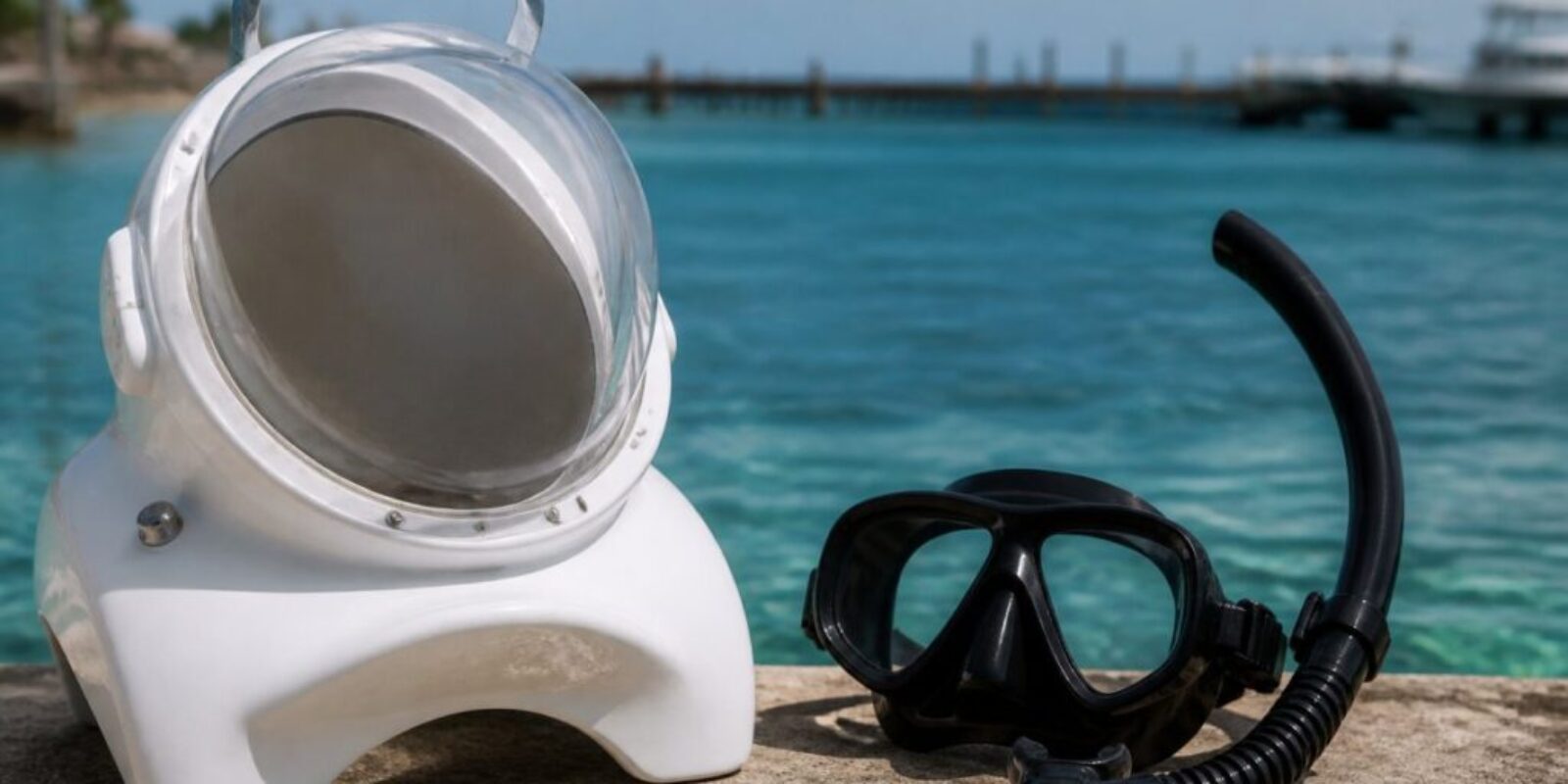
The core difference is simple. Snorkeling keeps you at the surface, face down, breathing through a tube. Helmet diving puts you on the seabed, standing tall, breathing air pumped into a helmet.
That single design choice changes everything that follows:
- Body position: floating face-down versus standing upright
- Air supply: a snorkel tube versus a constant pumped air supply
- Skill needed: relaxed floating versus basic walking
- View: surface-level versus eye-level with the reef
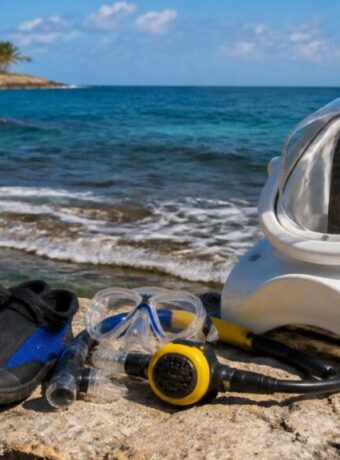
- Gear weight: light mask and fins versus a weighted helmet
One is a swim. The other is a stroll.
Breathing Underwater vs Breathing Through a Snorkel
Breathing is where beginners split into two camps. A snorkel works fine, but only if you stay calm and keep the tube clear of water. Panic or a mouthful of seawater ends the trip fast.
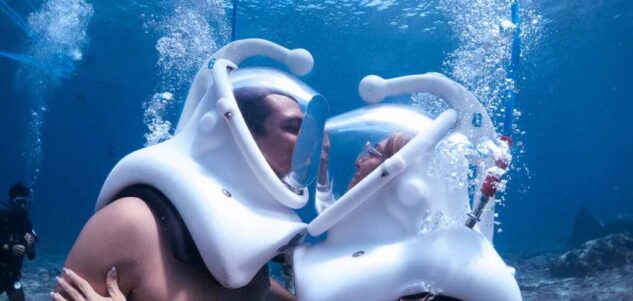
Helmet diving removes that problem. The helmet holds a pocket of air at your face, and fresh air flows in continuously. You breathe through your nose and mouth like you do on land.
What most guides miss is this: the hard part of snorkeling isn’t swimming. It’s trusting a plastic tube. A CDC guide on water safety and drowning prevention makes the point that comfort in water matters as much as ability.
Depth, Time Underwater, and What You Can See
Snorkelers stay on the surface, looking down through a mask. You see plenty on a clear day, but distance and glare flatten the view.
Helmet divers walk the bottom, usually at shallow depths where light still reaches the coral. You get close-up views of fish, coral heads, and reef structure from a few feet away.
Time underwater differs too. Snorkelers can paddle for an hour but tire from kicking. Helmet dives run on a fixed guided schedule, so you know exactly when you start and finish.
Can You Snorkel If You Can’t Swim?
Yes, technically. Many non-swimmers snorkel with a vest, a guide, and calm water. But “can” and “comfortable” are different words.
The honest answer: a non-swimmer can snorkel in sheltered water with close supervision. Open ocean, currents, or chop change the math quickly. A Red Cross water competency guidance stresses that supervision and flotation support are what make the difference.
If you’re unsure about deep water, ask three questions before booking:
- Is the water calm and shallow?
- Is there a guide in the water with you?
- Can you stand up if you need to?
If any answer is no, helmet diving is the safer bet.
Helmet Diving for Non-Swimmers: Why It Works
Helmet diving works for non-swimmers because it removes the two things that scare them: floating and breathing through a tube.
You climb down a ladder, land on the bottom, and stand. Air flows into the helmet the whole time. Your face stays dry. You can talk, wave, and walk.
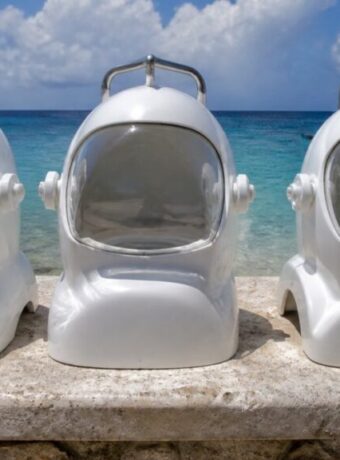
The helmet is weighted so it stays put, but you’re not carrying it. It rests on your shoulders with neutral buoyancy. Walking feels slow and a little bouncy, like the moon.
That’s why families with mixed abilities pick it. A nervous 70-year-old and an excited 10-year-old can do the same activity, side by side, at the same time.
Pro Tip
Ask your guide to demonstrate the “look up” signal before you descend. Tilting your head back lets trapped air escape and clears your ears, and knowing it in advance stops the first-time jolt.
Ask your guide to demonstrate the “look up” signal before you descend. Tilting your head back lets trapped air escape and clears your ears, and knowing it in advance stops the first-time jolt.
What to Expect on a Helmet Dive
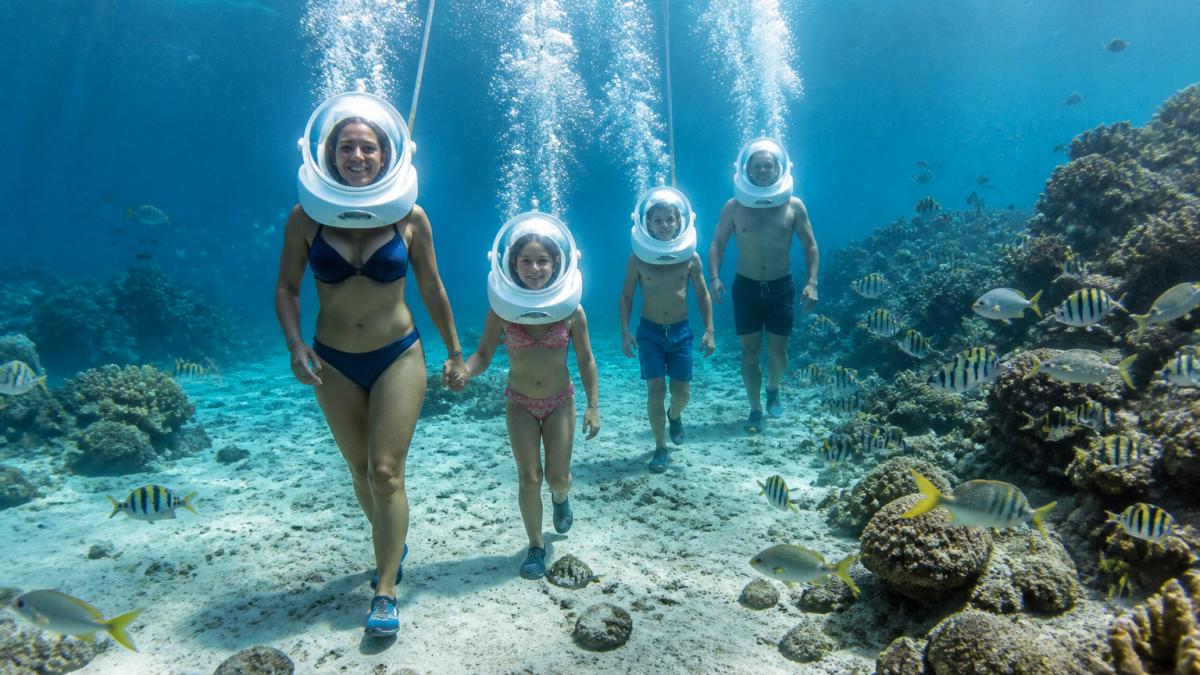
Here’s the full sequence, start to finish. A guide fits your helmet on the boat or platform, checks the air flow, and walks you through hand signals. Then you descend the ladder one step at a time.
At the bottom, you stand and wait for the guide’s okay. From there, it’s a slow guided walk along a set path. The guide points out fish and coral and stays within arm’s reach.
What surprises most first-timers:
- The quiet. Air flow hums, but the reef is calm and silent.
- The clarity. No mask fog, no saltwater sting.
- The freedom. You can look around, turn, and point without losing your air.
Guides handle the equipment check, the descent, and the exit. You focus on looking around.
How Long Does a Helmet Dive Last? Helmet Diving Duration Explained
Most guided helmet dives run a short briefing, a descent, and roughly 20 to 30 minutes on the bottom, with the whole experience taking about an hour to 90 minutes. Exact timing depends on the operator and group size.
That schedule matters for cruise passengers. A tight port window needs a fixed, predictable duration, not an open-ended paddle. Ask your provider for the total door-to-door time before you book.
Watch Out
Don’t book a helmet dive that ends within 60 minutes of your ship’s departure. Traffic, tender lines, and check-in eat buffer time. Leave at least 90 minutes of cushion.
Don’t book a helmet dive that ends within 60 minutes of your ship’s departure. Traffic, tender lines, and check-in eat buffer time. Leave at least 90 minutes of cushion.
Pricing varies by operator and group size, so check directly with your provider for current rates rather than relying on outdated quotes.
Safety, Comfort, and Accessibility Compared
Both activities are safe when they are run properly, but “safe” is not the same as “suitable for you.” The useful comparison is about comfort and access, not broad claims.
| Factor | Snorkeling | Helmet Diving |
|---|---|---|
| Swimming skill | Helpful; often required in open water | Not required |
| Breathing | Through a tube, mouth only | Normal, continuous air through nose and mouth |
| Body position | Face-down, floating | Upright, standing |
| Face in the water | Yes, the whole time | No, face stays dry inside the helmet |
| Gear weight | Light mask and fins | Heavier helmet, but supported by the shoulders and buoyancy |
| Best for | Confident swimmers, strong kickers | Non-swimmers, families, older adults, mixed-ability groups |
| Depth | Surface | Shallow bottom |
| Supervision | Varies widely by tour | Guide typically within arm’s reach |
That table is the starting point. The questions beginners actually ask are more specific.
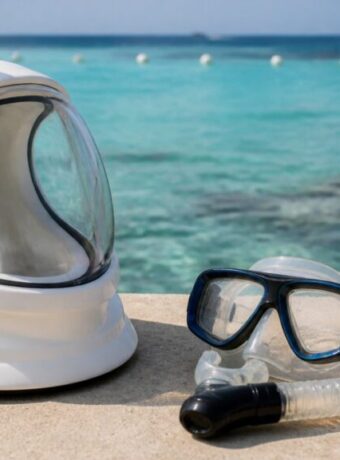
Claustrophobia and mask discomfort. A snorkel mask covers your eyes and nose, and some people never get comfortable with that. A helmet diving helmet is larger, but your face is dry and you can see out through a clear front panel. If tight masks bother you, ask to try the helmet on before you commit. If enclosed spaces bother you, be honest with the operator, a helmet is roomy but it is still on your head.
Mobility and health. Helmet diving involves climbing a short ladder and walking on a sandy bottom. It is slow and stable, but it is not seated. Snorkeling involves floating and kicking. If you have knee, hip, or balance concerns, tell the operator in advance and ask what the ladder and entry look like. If you have heart, lung, ear, or sinus conditions, or you are pregnant, check with a physician before either activity, that guidance applies to both, not just one.
Age and supervision. Many operators set their own minimum age, and policies vary. Ask directly rather than assuming. For families with mixed abilities, the practical advantage of helmet diving is that a nervous grandparent and a young child can do the same activity at the same time, with the guide nearby.
Questions to ask before you book either activity:
- How many participants per guide, and is the guide in the water with us?
- What is the maximum depth, and can I stand up at any point?
- What happens if I want to come up early?
- Is the water calm and sheltered at the site you use?
- What equipment is included, and do I need to bring anything?
- What is the cancellation or weather policy?
A Red Cross water competency guidance makes the point that supervision and flotation support are what separate a managed risk from an unmanaged one. That applies to snorkeling and helmet diving alike.
Watch Out
No activity is risk-free. The honest comparison is not “safe versus unsafe”, it is which set of risks you are prepared to manage, and whether the operator explains them clearly before you get in the water.
No activity is risk-free. The honest comparison is not “safe versus unsafe”, it is which set of risks you are prepared to manage, and whether the operator explains them clearly before you get in the water.
Snorkeling wins on freedom and cost. Helmet diving wins on comfort, accessibility, and calm. For a multi-generational group, the second column is usually the deciding factor.
Our team at SEA TREK Cozumel built our tours around that gap: no swimming, no certification, ages 8 to 80+, with all equipment provided on site and free entrance to Jeanie’s Beach Club included. If you want the underwater view without the surface stress, that’s the trade.
Frequently Asked Questions
What is the difference between helmet diving and snorkeling?
Snorkeling keeps you at the surface, face down, breathing through a tube while you view the reef from above. Helmet diving puts you on the ocean floor wearing a weighted helmet with a continuous air supply, so you breathe normally and walk among the fish. The view changes from a bird’s-eye angle to an eye-level one, and you do not need to swim, float, or tread water at any point during a helmet dive.
Can you helmet dive if you can’t swim?
Yes. Helmet diving for non-swimmers is the whole point of the activity. You descend a ladder into waist-deep water, a guide places the helmet on your shoulders, and air flows continuously while you breathe through your nose and mouth as you would on land. Buoyancy and the helmet’s weight keep you upright and stable on the seabed. No swimming, floating, or scuba certification is required, which is why providers accept guests from age 8 upward.
Is helmet diving safe for beginners and children?
Helmet diving is a guided, supervised activity with a strict equipment check before every descent. Participants walk rather than swim, stay on a marked route, and are accompanied by trained guides the entire time. Children as young as 8 can usually join when accompanied by an adult. Anyone with heart conditions, ear problems, or pregnancy should check with a doctor first, and you should always confirm the operator’s safety record and insurance before booking.
How long does a helmet diving experience usually last?
Total time from arrival to departure typically runs about 90 minutes to two hours, including briefing, equipment fitting, and the in-water session. The underwater portion itself is usually 20 to 30 minutes, which is enough to walk the reef route and see coral and fish up close. Ask the operator for the exact schedule if you are arriving by cruise ship and working against a port departure time.
Snorkeling and helmet diving both get you face to face with the reef, but they ask different things of you. If your group includes non-swimmers, grandparents, or nervous first-timers, helmet diving removes the barriers that sink a snorkel trip. At SEA TREK Cozumel, we provide the helmet, the guide, and the calm walk along the bottom, with no swimming or certification needed and a setup built for ages 8 to 80+. Get started with SEA TREK Cozumel and see the reef from the seabed, not the surface.