Last Updated: October 23, 2026
Quick Summary
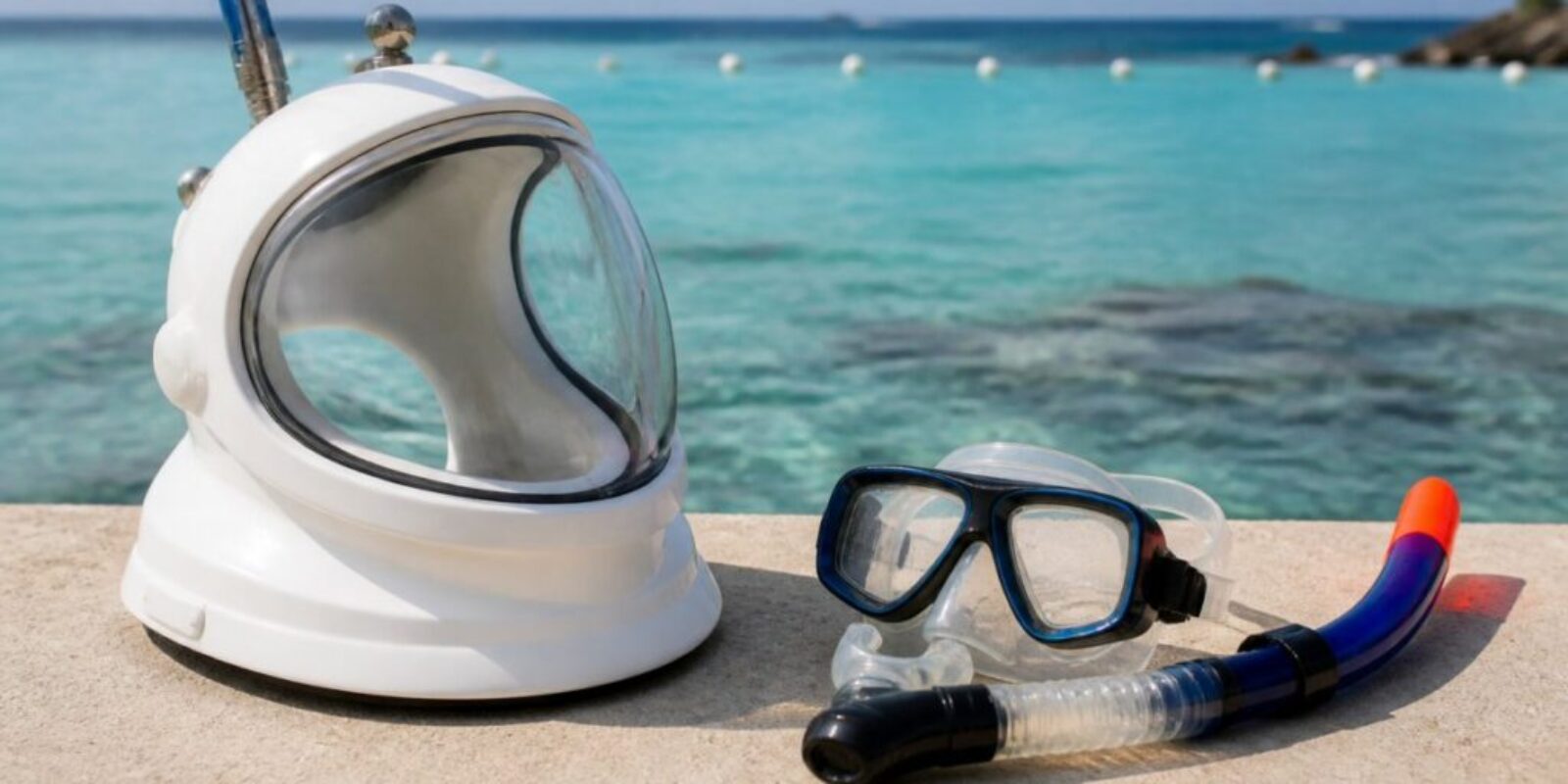
Helmet diving vs snorkeling for families differs fundamentally: snorkeling requires floating on the surface and breathing through a tube, while helmet diving lets you walk on the ocean floor wearing a special helmet that supports natural breathing. Helmet diving requires no swimming ability, making it ideal for families with non-swimmers, young children, or older adults.
- Helmet diving accommodates ages 8 to 80+ with no swimming skills needed, while snorkeling requires water comfort and floating ability.
- Helmet diving tours typically last 30 to 45 minutes total, whereas snorkeling can last several hours.
- Helmet diving is physically easier because you walk on solid ground instead of constantly kicking to stay afloat.
- Helmet diving provides constant guide supervision in shallow depths, while snorkeling is often self-guided with varying depth and less supervision.
- Multi-generational families can experience helmet diving together at the same pace, with no one left behind on the boat or beach.
Table of Contents
- Helmet Diving vs Snorkeling: The Core Differences
- Can You Snorkel If You Can’t Swim?
- Helmet Diving With Kids: What Parents Need to Know
- How Long Does Helmet Diving Take?
- Family Snorkeling Tips for a Better Experience
- Safety, Accessibility, and Physical Demands
- Which Activity Is Right for Your Family?
- Frequently Asked Questions
Helmet Diving vs Snorkeling: The Core Differences
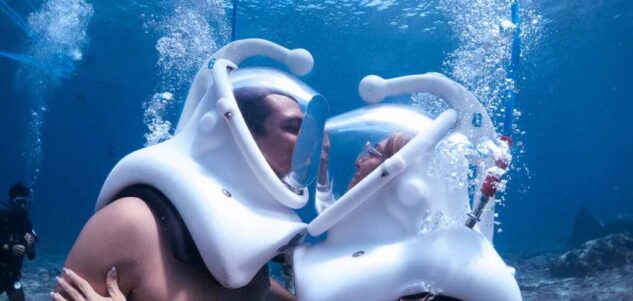
When considering helmet diving vs snorkeling for families, both offer ways to see underwater life, but they work in completely different ways. With snorkeling, you float on the surface and breathe through a tube. With helmet diving, you walk on the ocean floor while wearing a special helmet that lets you breathe naturally. The biggest difference? You need to be comfortable in water to snorkel. Helmet diving requires no swimming ability at all.
At SEA TREK Cozumel, we’ve worked with thousands of families who thought they couldn’t explore underwater because they couldn’t swim. Helmet diving changed that. You’re not floating or fighting the water. You’re walking, just like on land, looking at coral and fish.
Here’s what sets them apart:
- Snorkeling: Float on surface, breathe through tube, use fins to move, requires basic water comfort
- Helmet diving: Walk on ocean floor, breathe normally, guided experience, no swimming skill needed
- Age range: Snorkeling works for most ages; helmet diving accommodates ages 8 to 80+
- Physical effort: Snorkeling requires continuous floating and kicking; helmet diving is low-impact walking
- Time in water: Snorkeling can last hours; helmet diving tours are typically 30 to 45 minutes
- Equipment weight: Snorkel gear is light; helmet system is heavier but supported by buoyancy
The choice often comes down to one simple question: Can your family comfortably stay afloat and breathe through a tube? If yes, snorkeling works. If no, helmet diving is the answer.
Can You Snorkel If You Can’t Swim?
This is the question we hear most from families. The short answer: snorkeling is possible without strong swimming skills, but it requires water comfort and the ability to float.
Snorkeling doesn’t demand advanced swimming. You don’t need to swim laps or tread water. What you do need is the ability to stay relaxed on the surface and breathe calmly through the snorkel tube.
Here’s what actually happens when someone who can’t swim tries snorkeling:
- The snorkel tube can feel restrictive or scary
- Panic sets in if water enters the tube
- Floating requires trusting the water to hold you up
- Waves or currents feel more threatening when you’re not confident
- Exhaustion comes faster because you’re tense, not relaxed
A life jacket helps. A flotation vest makes snorkeling much easier for weak swimmers. But even with flotation, you need to be okay with being on the water’s surface. Some people simply aren’t comfortable there, no matter what gear they wear.
This is where helmet diving solves the problem completely. You’re not floating. You’re not worried about sinking. You’re walking on solid ground with a guide right beside you. No swimming skill needed. No floating required. No panic.
Pro Tip
If a family member gets anxious in water but wants to explore underwater life, helmet diving eliminates the main fear: the feeling of being unsupported. You’re literally standing on the ocean floor.
If a family member gets anxious in water but wants to explore underwater life, helmet diving eliminates the main fear: the feeling of being unsupported. You’re literally standing on the ocean floor.
Helmet Diving With Kids: What Parents Need to Know
Families with children ages 8 and up can do helmet diving together. Parents, kids, and even grandparents can share the same experience at the same time. That’s rare in water activities.
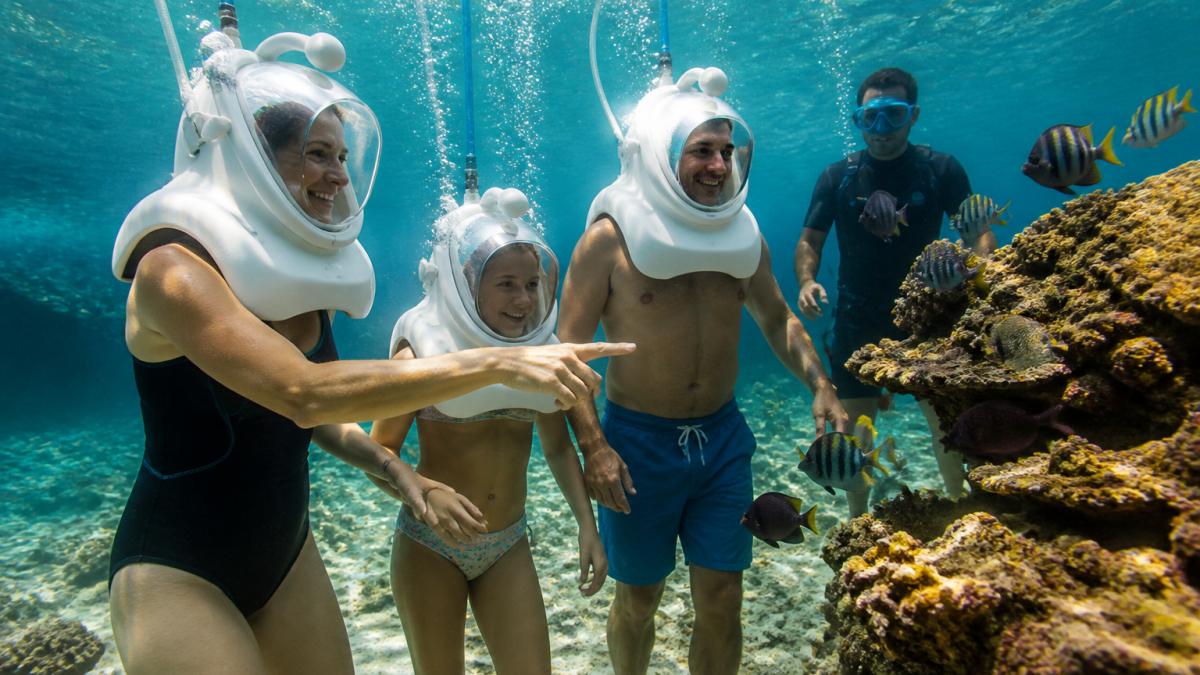
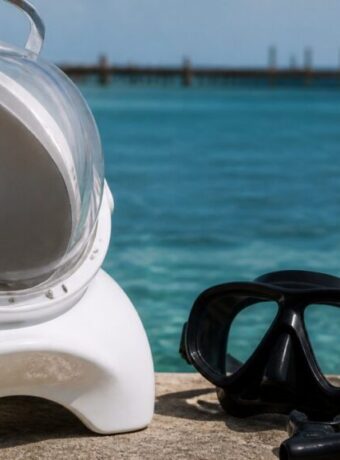
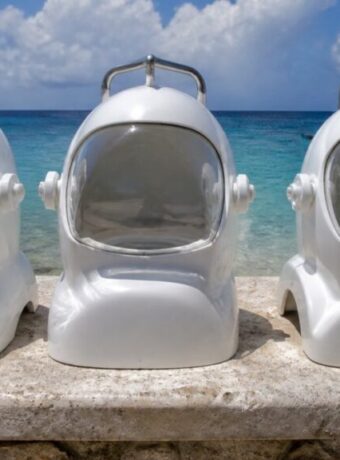
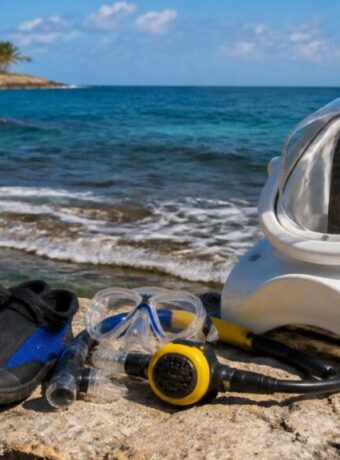
Here’s what the experience actually looks like. Your group meets at the beach. You get fitted with a helmet that feels like wearing a motorcycle helmet, except it’s full of air. A guide walks you into the water slowly.
The key is that everyone moves at the same pace. There’s no racing ahead or falling behind. Your 9-year-old, your 68-year-old parent, and you all experience the exact same thing, together. That’s the magic of helmet diving for families.
What parents worry about most:
- Will my child get scared? Kids are usually more curious than scared. They point at fish and forget to be nervous.
- How long do we stay down? Most tours keep you underwater for a memorable amount of time. Total experience is designed to be efficient.
- What if someone panics? Guides are trained to handle this. You’re never alone. If someone feels uncomfortable, you surface immediately.
- Is it safe? Helmet diving is a safe and immersive way to explore vibrant coral reefs and marine life. Our guided tours ensure a memorable, stress-free excursion.
Parents also ask whether kids need any training. They don’t. You get a quick orientation on the beach, then you walk in. The guide handles everything else.
Key Takeaway
Helmet diving lets multi-generational families experience the same underwater adventure together at the same time, with no one left behind on the boat or beach.
Helmet diving lets multi-generational families experience the same underwater adventure together at the same time, with no one left behind on the boat or beach.
How Long Does Helmet Diving Take?
Most helmet diving tours are designed to be efficient for visitors. That includes walking to the beach, getting fitted with gear, the briefing, time underwater, and getting back to the starting point.
The actual underwater time allows for a relaxed pace. You’re not rushing. You’re walking slowly on the ocean floor, stopping to look at coral formations and fish. The guide points things out and makes sure everyone stays comfortable.
Our tours are designed to be efficient and convenient for cruise ship passengers and families.
For cruise passengers, this matters. You need to know you’ll be back at the ship on time. Helmet diving tours are designed to fit cruise schedules. Most can guarantee you’re back within the window you need.
The standard experience is designed for people with limited time.
Watch Out
If your ship leaves in 3 hours and you’re 30 minutes from the dock, helmet diving is cutting it close. Build in buffer time for travel to and from the beach.
If your ship leaves in 3 hours and you’re 30 minutes from the dock, helmet diving is cutting it close. Build in buffer time for travel to and from the beach.
Family Snorkeling Tips for a Better Experience
If your family chooses snorkeling, a few simple things make a huge difference. Most snorkeling problems come from poor preparation, not the activity itself.
Start in shallow water. Spend your first 10 to 15 minutes in waist-deep or chest-deep water. Let everyone get used to the snorkel tube and breathing rhythm.
Practice the breathing technique before you go:
- Breathe slowly and deliberately through your mouth only
- Exhale fully to clear the tube
- Don’t hold your breath, continuous breathing prevents anxiety
- Relax your jaw; tension makes the tube feel worse
Use a flotation vest if anyone is nervous. This removes the floating challenge entirely. You focus on breathing and looking, not staying up.
Stay with your group. Don’t wander off chasing fish. Snorkeling accidents happen when people separate from their buddy or get too tired. Stick together, check on each other, and head back when anyone gets tired.
Bring sunscreen rated for water activities. You’re going to be out there for hours. Sunburn ruins the vacation.
Watch for signs of exhaustion. Snorkeling is more tiring than it looks because you’re constantly working to stay afloat.
Best For
Families with confident swimmers and water-comfortable kids who want to spend extended time exploring shallow reefs and are comfortable floating on the surface.
Families with confident swimmers and water-comfortable kids who want to spend extended time exploring shallow reefs and are comfortable floating on the surface.
Safety, Accessibility, and Physical Demands
Both activities are safe when done correctly. Helmet diving and snorkeling have different safety considerations, and different physical requirements.
Helmet diving is physically easier. You’re walking, not swimming. Your legs do the work, not your arms. There’s no floating, no treading water, no fighting currents.
The physical demands of helmet diving:
- Walk slowly on uneven ocean floor
- Maintain balance in a weighted helmet
- Breathe calmly and steadily
- Follow guide instructions
- Tolerate mild pressure from water depth
Most people can handle this. Even people with mobility issues often find helmet diving easier than snorkeling because they’re not fighting gravity or water resistance.
Snorkeling demands more from your body. You’re using your legs constantly to stay afloat. Your arms help stabilize you. Your core muscles work to keep you horizontal.
Safety differences:
- Helmet diving: Guided experience, shallow depth, close supervision, equipment failure is rare, trained staff present
- Snorkeling: Self-guided mostly, depth varies, less supervision, snorkel can fill with water, currents can surprise you
According to the CDC’s water safety guidelines, most water-related injuries happen to people who don’t have a buddy or proper supervision. Helmet diving tours provide constant supervision.
Age and physical ability matter for both. Helmet diving works for ages 8 to 80+ because you’re not fighting the water.
Medical conditions to consider:
- Heart conditions: Check with your doctor before either activity
- Ear problems: Both activities involve water pressure; consult your doctor
- Claustrophobia: Helmet diving might feel confined; snorkeling is open
- Asthma: Breathing through a snorkel tube can trigger issues; discuss with doctor
- Joint or back pain: Helmet diving is easier; snorkeling requires more core work
Which Activity Is Right for Your Family?
The answer depends on four things: swimming ability, age range, time available, and what you want to see.
Choose helmet diving if:
- Anyone in your family can’t swim or is uncomfortable in water
- You have young children (under 10) or adults over 70
- You want a guided, supervised experience
- You have limited time (under an hour total)
- Anyone has joint, back, or mobility concerns
- You want to guarantee everyone experiences the same thing together
- You’re on a cruise ship with a tight schedule
Choose snorkeling if:
- Everyone is a confident swimmer
- Your group is comfortable floating and breathing through a tube
- You want to spend 2 to 4 hours exploring
- You prefer independence and self-guided exploration
- Everyone is physically fit and can handle continuous kicking
- You’re staying in one place for several days
Here’s the honest truth: when evaluating helmet diving vs snorkeling for families, helmet diving is the better choice for most families visiting the Caribbean.
Snorkeling is wonderful if your family is already comfortable in water. But if anyone is hesitant, nervous, non-swimming, or older, helmet diving removes all the barriers.
At SEA TREK Cozumel, we’ve seen families with 8-year-olds and 80-year-olds do helmet diving together. We’ve worked with people terrified of water who discovered they love the underwater world once they didn’t have to float.
The real question isn’t which activity is objectively better. It’s which one your family can actually enjoy together without fear, exhaustion, or anyone getting left behind.
Helmet diving and snorkeling both offer ways to see underwater life, but they serve different families. Just you, your family, and the underwater world. Learn more about accessible water activities from travel safety resources and discover how to make your vacation work for everyone.
Get started with SEA TREK Cozumel and experience helmet diving designed for families.
Frequently Asked Questions
Can you snorkel if you can’t swim?
Snorkeling requires basic comfort in water and the ability to float, even if you’re not a strong swimmer. You must keep your face in the water while breathing through the snorkel tube, which demands some water confidence. Non-swimmers often struggle with panic or water entry. Helmet diving is a better option for non-swimmers since you walk on the ocean floor with your head above water inside a helmet, requiring no swimming ability at all.
Is helmet diving easier than snorkeling for families?
Helmet diving is generally easier for mixed-ability families. You walk on the seafloor rather than float, eliminating swimming concerns. There’s no need for certification, and all ages from 8 to 80+ can participate together. Snorkeling requires more water confidence and physical effort to maintain buoyancy. Families with non-swimmers, young children, or elderly members often find helmet diving more inclusive and less physically demanding.
What age can kids try helmet diving?
Children as young as 8 years old can participate in helmet diving experiences. The activity is designed to be accessible across ages, with no swimming skills or prior training required. Kids simply walk on the ocean floor and breathe naturally inside the helmet. Always confirm age requirements with your specific operator, as some may have slightly different minimums based on their equipment and safety protocols.
How long does a typical helmet diving experience last?
A complete helmet diving experience is designed to be efficient for visitors. The full duration includes arrival, orientation, equipment fitting, entry, the underwater walk, exit, and cleanup. For cruise passengers with limited port time, confirm exact timing with your operator to ensure you return to your ship on schedule.