Table of Contents
- What Makes Helmet Diving Worth Considering
- Helmet Diving Safety: What You Need to Know
- Helmet Diving for Non-Swimmers: No Experience Required
- Helmet Diving vs Scuba Diving: Which Is Right for You
- What to Expect: Helmet Diving Experience Duration and Timeline
- The Real Value: What You’re Paying For
- Is Helmet Diving Right for Your Family
- Conclusion: Why Helmet Diving Delivers an Unforgettable Experience
- Frequently Asked Questions
Last Updated: October 14, 2026
What Makes Helmet Diving Worth Considering
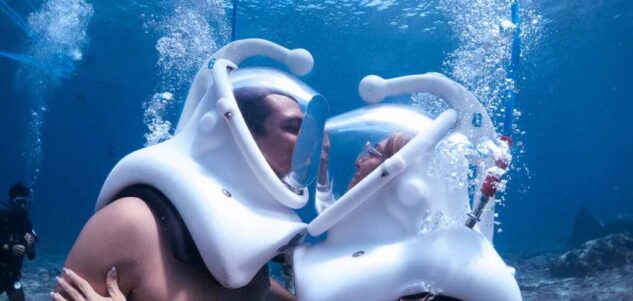
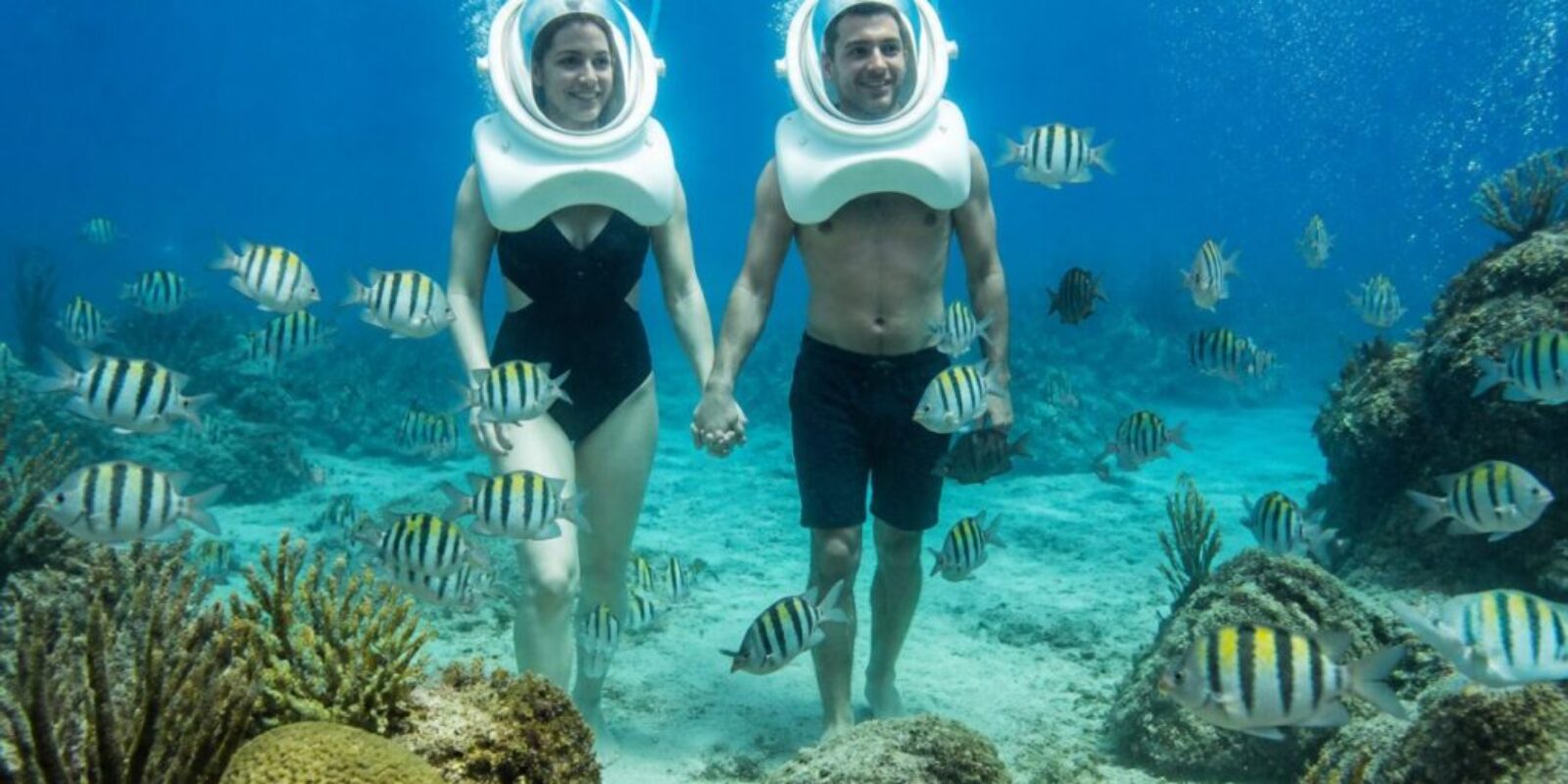
Helmet diving is different from the typical Caribbean water activity. You’re not floating on the surface watching fish below you, you’re standing on the ocean floor, breathing naturally, surrounded by coral and marine life at eye level. That shift in perspective is why helmet diving is worth it for most visitors.
A specially designed helmet delivers air to your lungs while you walk on weighted shoes across the seabed. No scuba certification or swimming skills required. At SEA TREK Cozumel, we’ve refined this for ages 8 to 80+, so families can experience it together.
Snorkeling keeps you at the surface, looking down through a mask. Helmet diving puts you underwater on a pathway, with the reef surrounding you completely.
Pro Tip The weighted helmet and shoes do the work for you. You don’t fight buoyancy or worry about floating. You simply walk, breathe, and observe. This is why people with water anxiety often find it less stressful than swimming.
Helmet Diving Safety: What You Need to Know
Helmet diving has a strong safety record, but ‘safe’ is not the same as ‘suitable for everyone.’ Here’s who should book, who should talk to a doctor first, and what the operator does before you put the helmet on.
How the system actually protects you. The helmet is a hard shell on a shoulder yoke, fed by a continuous surface air supply from a compressor or tank bank.
Medical screening, the part most articles skip. Reputable operators use a short health questionnaire before every session. Conditions that commonly require a doctor’s clearance or disqualify a participant include:
- Pregnancy (most operators do not allow it at any stage)
- A history of heart attack, angina, or uncontrolled high blood pressure
- Asthma that is exercise-induced or poorly controlled
- Pneumothorax (collapsed lung) or recent chest surgery
- Epilepsy or a seizure disorder
- Severe claustrophobia or panic disorder
- Recent ear surgery, a perforated eardrum, or an active ear infection
- A cold, sinus infection, or congestion on the day of the dive
- Recent alcohol or sedative use
This list is not a substitute for medical advice. If you have any of these conditions, ask your physician before booking and disclose them on the operator’s form.
Age, height, and mobility. Many operators set a minimum age around 8 and a minimum height around 48 inches, since the helmet and harness are sized for a certain frame.
When to skip it. Do not book with a cold, sinus infection, or congestion, you won’t be able to equalize, and forcing it can injure your ear. Do not book if you’ve been drinking or taken sedatives, or if you’re pregnant.
Watch Out Do not attempt to remove the helmet underwater or deviate from the guided pathway. The system works only when used as designed. Your guide is there to keep you safe and comfortable, not to entertain you. Follow their instructions exactly.
If you are unsure whether a condition disqualifies you, call the operator before you book. A two-minute phone call is far better than being turned away at the dock, or, worse, getting in the water when you should not have.
Helmet Diving for Non-Swimmers: No Experience Required
This is the core reason why helmet diving is worth it for a specific audience. If you can’t swim or haven’t been in the ocean in decades, helmet diving doesn’t exclude you. It welcomes you.
You don’t need to float, tread water, or manage your position in the water column, the weighted equipment handles that. You walk on the ocean floor the same way you walk on land, except you’re underwater.
Air comes through the helmet, so you breathe normally, no regulator, no managing your breathing rate. Your only job is to stay calm and follow your guide.
Non-swimmers often report that helmet diving feels safer than snorkeling, because they’re not worried about staying afloat or panicking about sinking. You’re already on the bottom, standing on solid ground, which reverses the anxiety most non-swimmers feel in water.
Age is not a limiting factor. Older visitors, people with mobility concerns, and those recovering from injury find helmet diving accessible because it requires no swimming ability and minimal exertion, you walk slowly on a prepared pathway.
Helmet Diving vs Scuba Diving: Which Is Right for You
Scuba diving is more complex, requires certification, and demands active management of your air supply and buoyancy. You’re suspended in the water, breathing through a regulator, controlling your depth, air consumption, and ascent rate.
Helmet diving is simpler. You’re on the ground. Air flows to you continuously. You walk at your own pace on a guided underwater pathway. No certification. No training required beyond a brief orientation.
Scuba diving gives you more freedom of movement. You can swim in any direction, explore at depth, and stay underwater longer. Helmet diving keeps you on a specific route at shallow depth (typically 20-40 feet), which is actually ideal for seeing coral and reef fish clearly.
The cost difference is significant. Scuba certification requires multiple dives and classroom time, while helmet diving happens in a single session with no prerequisites. For cruise passengers with limited time, helmet diving is faster and more convenient.
Scuba is better if you want to become a certified diver and make diving a regular hobby. Helmet diving is better if you want to experience the underwater world once or twice without commitment or training.
Helmet diving is ideal for cruise passengers, families with mixed ages, non-swimmers, and anyone who wants to see a coral reef without scuba training or swimming ability.
What to Expect: Helmet Diving Experience Duration and Timeline
Most helmet diving sessions run 45 minutes to 1 hour total, including briefing, suiting up, the underwater walk, and returning to the surface.
Step 1, Check-in and health form (5-10 minutes). You sign a waiver and complete a short medical questionnaire.
Step 2, Briefing (10-15 minutes). Your guide explains the helmet, weighted shoes, air system, and hand signals.
Step 3, Suiting up (5-10 minutes). You put on a wetsuit or rash guard, then weighted shoes or boots, then the helmet.
Step 4, Entry and shallow-water orientation (5-10 minutes). You enter in shallow water first, near the beach or platform, where you can stand comfortably.
Step 5, Descent to the pathway (2-5 minutes). You walk down a slope, ramp, or ladder to the underwater pathway, typically 20-40 feet deep depending on the location.
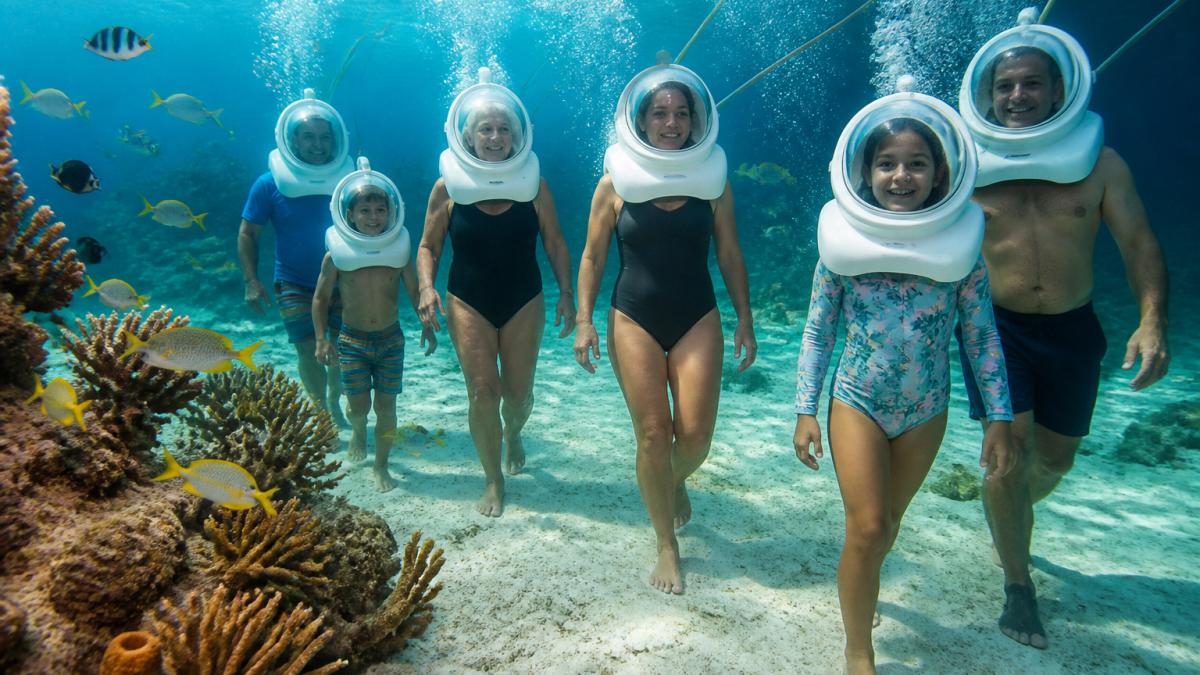
Step 6, The underwater walk (20-30 minutes). You walk along a prepared route, observing coral formations, tropical fish, and reef life.
Step 7, Ascent and exit (5-10 minutes). You walk back up the slope or ladder, return to shallow water, and exit with your guide’s assistance.
What is included, and what is not. A typical session includes the helmet, weighted shoes, wetsuit or rash guard, air supply, guide, and the underwater walk.
Key Takeaway The whole experience is roughly an hour, but the underwater walk itself is 20-30 minutes. Plan your day around the full window, not just the seabed time.
The Real Value: What You’re Paying For
Helmet diving pricing varies by operator and location, but you’re paying for specialized equipment, trained guides, liability insurance, and a curated underwater experience.
The helmet system is engineered equipment, not a snorkel or simple mask. The air supply, weight distribution, and helmet design require investment and maintenance. You’re paying for equipment that works reliably and safely.
Your guide is trained in water safety, emergency response, and marine environment knowledge, managing your experience and watching for discomfort. This expertise has real value, especially if you’re anxious about water.
The location matters too. A reef with healthy coral, visible marine life, and a prepared underwater pathway isn’t random, operators invest in maintaining these sites, managing visitor impact, and ensuring suitable water conditions.
Insurance and liability coverage are built into the cost, because reputable operators manage risk for visitors with limited water experience.
At SEA TREK Cozumel, we include access to Jeanie’s Beach Club as part of the experience, which adds value beyond the helmet diving itself. You’re getting a complete shore excursion, not just 30 minutes underwater.
Compare this to a basic snorkel tour, which requires less equipment, no specialized training, and minimal liability. The price difference reflects the added complexity and safety infrastructure helmet diving requires.
Is Helmet Diving Right for Your Family
Helmet diving works for multi-generational families in ways most water activities don’t. Your 9-year-old, your 68-year-old grandmother, and your teenager can all do it, everyone shares the same activity, not separate ones based on age or ability.
Kids as young as 8 typically participate without issue. They adapt quickly to breathing underwater and are often less anxious than adults about trying something new. The weighted equipment helps younger visitors stay stable and calm.
Older visitors and those with mobility limitations find helmet diving manageable because there’s no swimming, no floating, and no exertion beyond slow walking. If someone can walk on land, they can walk on the seabed.
The only real limitation is claustrophobia. If someone feels severely anxious in enclosed spaces, the helmet might trigger that response. But most people who worry about it find the helmet less confining than expected, because you can see clearly, breathe easily, and your guide is right beside you.
Physical concerns like back pain or joint issues are generally not barriers. You’re not carrying heavy gear or fighting water resistance, you’re walking slowly on a flat surface. Talk to your guide about any concerns before you start, and they can adjust the experience.
Helmet diving is genuinely inclusive. It’s one of the few water activities where age, swimming ability, and fitness level don’t determine who can participate.
Conclusion: Why Helmet Diving Delivers an Unforgettable Experience
Helmet diving is worth it because it offers something most Caribbean visitors never experience: walking on the ocean floor and seeing the reef from inside the ecosystem, not from above it.
You don’t need to be a diver, a swimmer, or an athlete, just willing to try something different. At SEA TREK Cozumel, we’ve designed this experience to be accessible, safe, and memorable for families, cruise passengers, and anyone curious about the underwater world.
The weighted helmet and shoes keep you stable. The continuous air supply lets you breathe naturally. Your guide manages your safety and comfort. What remains is pure experience, walking among coral, watching fish, and discovering why the reef matters.
Frequently Asked Questions
Is helmet diving safe for non-swimmers?
Yes. Helmet diving requires no swimming ability because you walk on the seabed rather than float or swim. The weighted helmet and shoes keep you grounded, and you breathe naturally through the air supply. A trained guide stays with you throughout the experience. Your head stays dry inside the helmet, and the shallow-water environment means you’re never far from the surface. Many participants who are anxious about water find helmet diving more comfortable than snorkeling because you’re supported underfoot.
How long does a helmet diving experience actually take?
A typical helmet diving experience offers ample time underwater, with the total visit time, including briefing, equipment fitting, and descent, designed to be convenient for cruise passengers with limited port time. The actual underwater walking session gives you plenty of time to observe marine life and coral formations without rushing. Check with your operator about their specific timeline to ensure you have adequate buffer before your ship departs.
How is helmet diving different from scuba diving?
Helmet diving requires no certification, training, or swimming skills, whereas scuba diving requires certification courses. In helmet diving, you walk on the ocean floor with air supplied through a hose; in scuba, you carry air tanks and must manage buoyancy while floating. Helmet diving keeps your head and hair dry and can be more comfortable for people with claustrophobia. Scuba offers greater freedom of movement and deeper exploration, but helmet diving is more accessible and less physically demanding.
Can children and seniors really do helmet diving together?
Yes. Helmet diving is designed for ages 8 to 80+, making it one of the few underwater activities where multi-generational families can participate together. There are no upper age limits, comfort and mobility matter more than age. Children enjoy the novelty and direct contact with the seabed, while seniors appreciate that there’s no swimming required and they’re fully supported. Your guide assesses each participant individually and adjusts the experience to ensure everyone feels safe and comfortable.
If you’re visiting and wondering whether helmet diving is worth your time and money, the answer is yes. It’s one of the few activities that delivers something genuinely different. Get started with SEA TREK Cozumel and experience the underwater world in a way that’s as easy as walking on land.