Quick Summary
The best cozumel shore excursions for elderly travelers are accessible beach stays and village tours with shaded seating, ramps or level paths, and private or small-group tours that let the pace adjust. Confirm the walking distance, steps, surfaces and seating at every stop before booking, because an accessible vehicle does not guarantee an accessible route.
- Ask operators for total walking distance, number of steps and surface type at each stop.
- An accessible label often refers only to the vehicle, not every stop on the route.
- Plan your return from the tour working backward from the ship’s all-aboard time.
- Helmet diving needs no swimming skills, but travelers with heart, lung or balance conditions should check with a doctor first.
- Carry medications in your carry-on bag and bring a written prescription list.
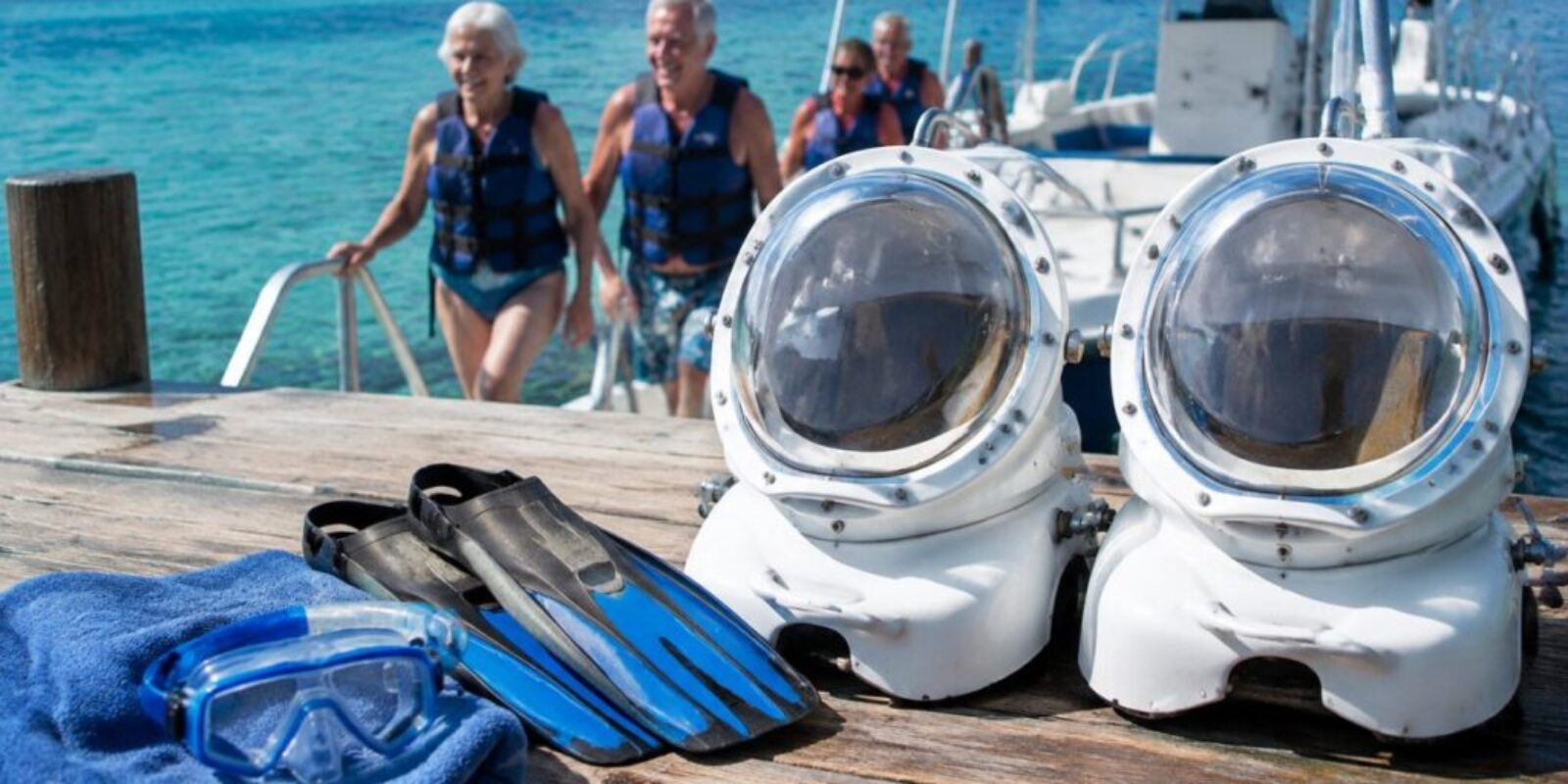
Can you walk the reef without swimming?SEA TREK Cozumel offers guided helmet diving for non-swimmers, ages 8 to 80+, with equipment provided on-site.
Table of Contents
- How We Rated Cozumel Excursions for Older Travelers
- Side-by-Side Comparison of Cozumel Shore Excursions
- Accessible Cozumel Shore Excursions With Wheelchair and Walker Access
- Cozumel Excursions for Non-Swimmers: Helmet Diving and Low-Water Options
- Private Cozumel Excursions for Seniors and Small Groups
- Medical, Comfort and Cruise-Day Timing Planning
- Booking Your Senior-Friendly Cozumel Day Before Your Ship Sails
- Frequently Asked Questions
How We Rated Cozumel Excursions for Older Travelers
Last Updated: November 17, 2026
Planning a Cozumel port day with an older traveler is less about finding the most exciting tour and more about matching the tour to real physical limits. A cruise passenger who can walk a mile on flat ground may still struggle with wet stairs, soft sand or a six-hour day with no shade. This guide looks at the cozumel shore excursions for elderly travelers that are most worth your time, and explains how to judge each one before you book. Matching an excursion to those limits is one part of a comfortable port day, while luxury cruise planning for seniors also means considering the pace and accessibility of the wider trip.
We rated each option on five practical points: walking demands, access to water, transportation, rest stops and total cost. We kept the focus on what a traveler can verify before sailing, not on general praise. Where published information was thin, we say so.
Two things to know before you read further. First, ask the operator directly about ramps, steps and sand before you pay. Second, plan around the ship’s all-aboard time, not the tour’s end time. Cruise ship passengers often underestimate how long the return trip to the pier takes.
Side-by-Side Comparison of Cozumel Shore Excursions
The table below summarizes the main types of cozumel shore excursions for elderly travelers. Prices change, so confirm before booking with each operator.
| Excursion Type | Published Price (USD) | Walking Distance (est.) | Steps / Surfaces | Seating & Shade | Wheelchair / Walker | Best For |
|---|---|---|---|---|---|---|
| Accessible village and beach stay | Contact for pricing | Under 0.5 mile total, broken into short walks | Paved village route; level path to beach seating; confirm sand crossing | Shaded beach seating and village benches | Advertised accessible; confirm each stop | Mixed-mobility groups who want a seated beach day |
| Snorkeling trip | From USD $40 per child, USD $50 per adult | Short walk to boat; boat entry | Wet ladder or platform entry; no beach walking | Seating on boat; limited shade | Not suitable for wheelchair users | Confident swimmers only |
| Seniors-category tours | From USD $35.99 | Varies by listing, ask for a number | Varies; ask about curbs, cobblestones and stairs | Varies by listing | Varies by listing | Comparing advertised options |
| Cruise-line tours | Typically USD $50 to USD $150 per person | Varies by excursion, request the walking distance in writing | Varies; ship tours often include a coach with steps | Coach seating; shade varies by stop | Limited; ask about lift-equipped coaches | Passengers who want ship-backed timing |
Three columns do the most work for older travelers. First, walking distance: ask for a total number and whether it is continuous or broken into short walks with rest stops. Second, surfaces: a paved village route is very different from loose sand or wet boat ladders, and most listings do not say which you will meet. Third, seating and shade: a tour with benches and shaded stops is easier than one with the same walking distance and nowhere to sit.
Watch out: an “accessible” label on a listing usually refers to the vehicle, not every stop. Ask separately about the van or coach, the village route, the beach path and the restrooms, because one inaccessible stop can strand a traveler for the length of the visit.
Use the table to shortlist two or three options, then ask the operator the same four questions for each: total walking distance, number of steps, surface type at each stop, and whether a walker or wheelchair can be used throughout. If the answers are vague, treat that as a signal rather than a green light.
Accessible Cozumel Shore Excursions With Wheelchair and Walker Access
Accessible tours are the safest starting point for travelers who use a walker, cane or wheelchair.
Before you book any accessible tour, ask how many steps are on the route, whether any path is level from the parking area, and how long each drive runs without a stop.
Watch out: an “accessible” label does not guarantee that every stop is accessible. Confirm each stop separately.
Accessible Beach Stays and Village Tours
A beach stay gives older travelers a place to sit, eat and watch the water without swimming. Village visits are useful for travelers who want to see local life at a slower pace, with shade and shops along the way.
For a beach day, look for shaded seating, restrooms and a path that does not require crossing deep sand. Those three details matter more to older travelers than the length of the beach.
Cozumel Excursions for Non-Swimmers: Helmet Diving and Low-Water Options
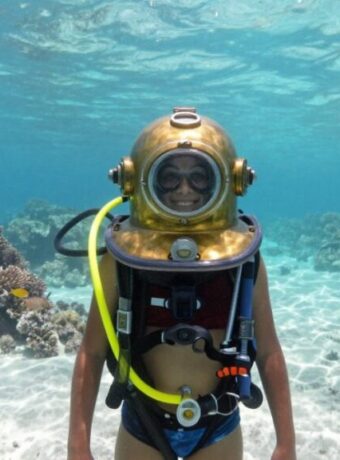
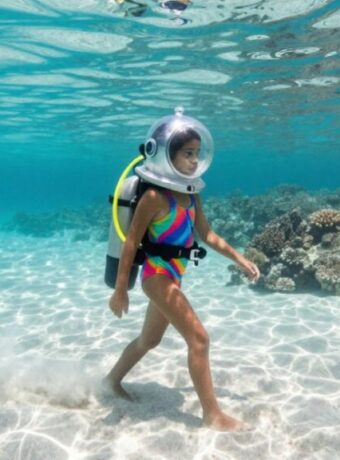
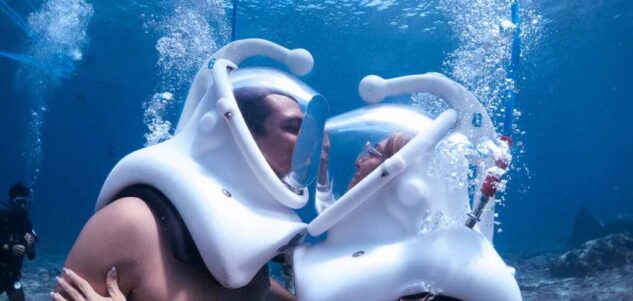
Non-swimmers and travelers who are uneasy in water have more options than snorkeling. SEA TREK Cozumel offers an underwater helmet diving experience that does not require swimming skills or scuba certification, and guests walk on the ocean floor while breathing naturally. See what helmet diving feels like for a first-timer before you go. The guided tours are designed for ages 8 to 80+, with equipment provided on-site.
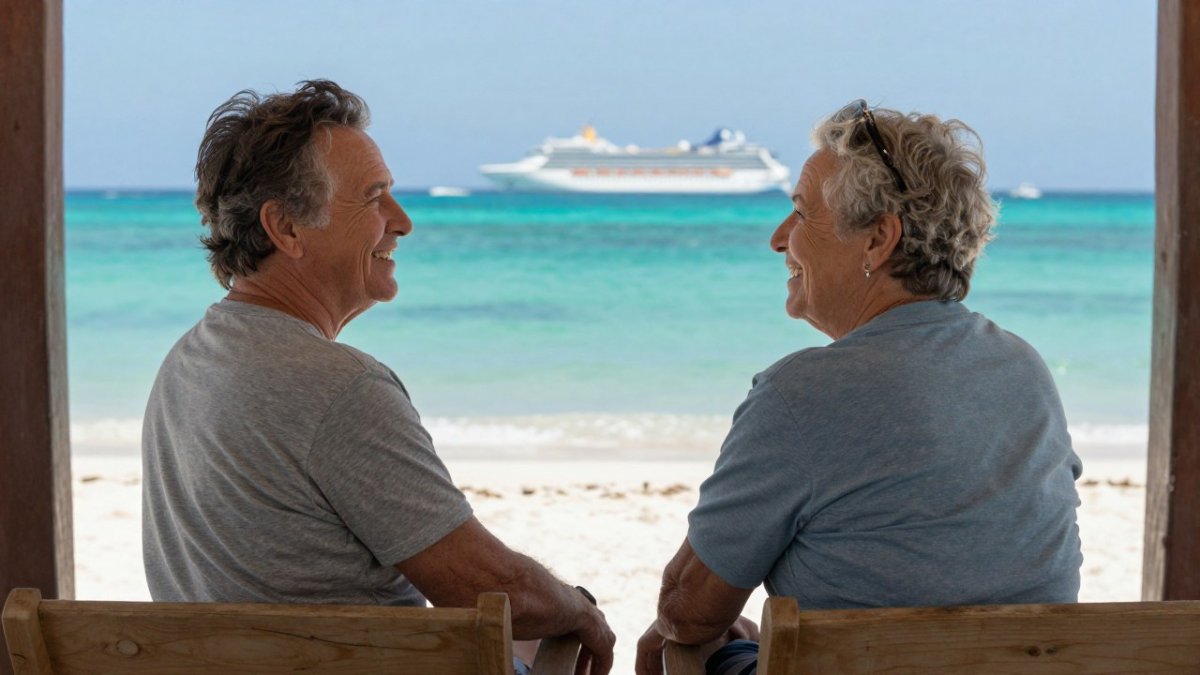
Snorkeling is a different experience. Snorkeling assumes you can float and move in the water. If you cannot swim, treat snorkeling as a poor fit. Explore whether non-swimmers can enjoy these excursions for other options.
Helmet diving is not risk-free, and it is not for everyone. Travelers with serious heart, lung or balance conditions should check with their doctor first. Ask the crew to explain the procedure before you enter the water. Read whether helmet diving is safe for seniors before deciding.
Best for: non-swimmers and first-time underwater visitors who want to see reefs without swimming.
Skip if: you have a medical condition that affects breathing, ears or balance, unless your doctor has approved it.
Private Cozumel Excursions for Seniors and Small Groups
Private and small-group tours can give older travelers control over pace, which is often an important factor. Ask whether a private driver can stop when a traveler needs a rest, skip a steep path and return to the ship on schedule.
Small-group tours sit between private and large-group options. Ask how many people are in the group and whether the guide adjusts pace.
Medical, Comfort and Cruise-Day Timing Planning
Most excursion listings stop at the tour description. This section covers the planning that actually decides whether an older traveler has a good port day: realistic timing, what to do if the day goes wrong, and the comfort details that are easy to forget until you are in the sun.
Timing from pier to pier. Work backward from the ship’s all-aboard time, not the tour’s advertised end time. Build in a buffer before all-aboard, and allow extra time if anyone in the group walks slowly or uses a mobility device. If a tour is booked through the ship, confirm whether the ship will wait for a late return; usually it will not, and independent tours carry the same risk with no ship-backed protection.
Pickup and meeting points. Confirm where the tour meets relative to your ship’s pier. Ask whether the operator provides pier pickup, whether the vehicle is step-free or lift-equipped, and what happens if your ship arrives late or changes pier. Get the operator’s local contact number and a backup number before you leave the ship.
If a traveler needs to end the tour early. Ask the operator before booking how a mid-tour exit works: whether the vehicle can return a traveler to the pier, how long that takes, and whether there is a cost. Carry the ship’s port agent contact and your own phone charged, and tell the guide at the start if someone in the group may need to leave early.
Medical and comfort planning. Carry medications in your carry-on, not checked luggage, and bring a written prescription list. Follow a step-by-step helmet diving preparation guide to plan the rest of your cruise day. Pack sunscreen, a hat, water and a light layer for air-conditioned vans and boats. Heat and sun exposure are common causes of trouble on a port day, so plan rest stops in shade and ask the guide where the accessible restrooms are at each stop. Ask the operator what happens if the weather turns, since sea conditions can cancel water activities, and get the refund or rebooking policy in writing.
Watch out: a tour that ends 30 minutes before all-aboard leaves no room for a slow walk, a restroom stop or a pier security line. Treat any tour ending inside the final hour as a timing risk, regardless of what the listing says.
Booking Your Senior-Friendly Cozumel Day Before Your Ship Sails
Start with three questions: How much walking is involved? Is there a place to sit and rest? Will I be back at the pier with time to spare? If the operator cannot answer all three clearly, look elsewhere. Step-by-step reservation tips cover what to ask before you pay.
Book early for accessible or private tours, since these sell out faster than standard options. Compare the included items, not only the headline price. An excursion that includes entrance fees, a tasting and a beach stay may cost more but leave you with fewer surprise charges.
If you want a water-based day with no swimming required, SEA TREK Cozumel offers helmet diving tours designed for non-swimmers and families, with equipment provided on-site.
Frequently Asked Questions
Can elderly travelers explore Cozumel on their own from the cruise port?
Yes, many older travelers walk or take a short taxi ride from the cruise pier into town, and the port area has shops and restaurants close by. The trade-off is distance and heat. Walking the main waterfront is manageable for most, but reaching beaches, ruins or attractions outside town usually requires a taxi or tour. Check your mobility before you go, carry water and shade, and keep track of your ship’s all-aboard time, which is usually printed on your cruise documents.
What should older adults be careful of during a Cozumel shore excursion?
Watch the heat and humidity, which can cause dehydration faster than expected. Expect uneven ground, sand, steps and occasional unpaved paths at beaches and village sites. Wear shoes with good grip, bring any medications and a copy of your prescriptions, and tell your guide about heart, balance or mobility conditions before you board. Plan rest breaks and confirm the return time to your ship, since most cruise lines will not hold a boat for late passengers.
Are there wheelchair-accessible shore excursions in Cozumel?
Some operators list accessible options, such as accessible village tours and beach stays with ramps and level paths. Accessibility varies by site, and terrain at many natural attractions is uneven. Ask the operator directly about ramps, restroom access, transfer assistance and whether the vehicle is a wheelchair-accessible van. Get written confirmation of these details when you book, because published descriptions can differ from what you find on the day.
Can you enjoy Cozumel excursions without swimming?
Yes. Non-swimmers can take scenic drives, village and ruin visits, shopping stops and beachfront lunches without entering the water. Underwater helmet diving is designed for people who cannot swim, since you walk on the sea floor while breathing through a helmet. Glass-bottom boat rides and beach clubs with pools are other low-water options. Tell the operator about your comfort level so they can match you to the right activity.