Last Updated: November 8, 2026
Quick Summary
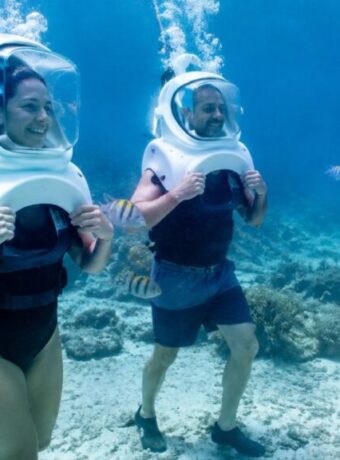
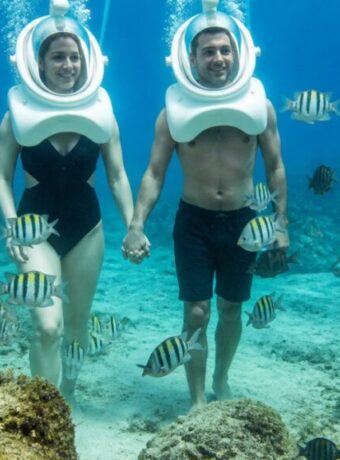
Helmet diving feels like walking through a very quiet, very blue room: you stand upright on the seabed wearing a weighted helmet that keeps air flowing past your face while your head stays dry. You breathe normally, your head stays vertical, and you stroll rather than swim.
- The helmet rests on your shoulders and is weighted to keep your head upright underwater.
- Air is pumped down from the surface through a hose, so you never draw from a tank.
- Water sits at about chin level inside the helmet, so your face stays dry.
- Balance comes fast because the helmet keeps your head vertical and your center of gravity predictable.
- Non-swimmers can do it because you never swim and your head never goes under.
Nervous about your first helmet dive?We walk first-timers and non-swimmers across the seabed every day, with air supplied from the surface.
Table of Contents
- What Helmet Diving Is and How It Works
- What the Underwater Experience Feels Like
- Is Helmet Diving Safe? Safety Procedures and Supervision
- Helmet Diving Depth and Time Underwater
- Helmet Diving for Non-Swimmers: Who Can Do It
- Helmet Diving vs Snorkeling: What’s the Difference
- What to Wear and Bring for Your Helmet Dive
- Book Your Helmet Diving Adventure with SEA TREK Cozumel
- Frequently Asked Questions
What Helmet Diving Is and How It Works
Helmet diving is a guided underwater walk where you wear a weighted diving helmet that keeps a constant supply of air flowing past your face while you stand and walk on the seabed. No mask, no regulator in your mouth, no tank strapped to your back. The reaction is often the same: people expect it to feel strange and discover it feels closer to walking through a very quiet, very blue room.
The system traces back to commercial diving, where hard-hat helmets have supplied surface air to working divers for well over a century. The recreational version shrinks that equipment down to something a nine-year-old or a seventy-five-year-old can wear comfortably.
The Helmet and Air Supply
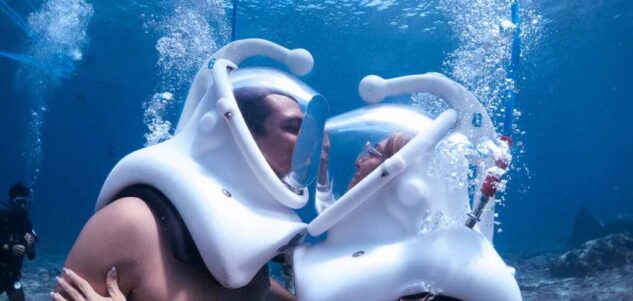
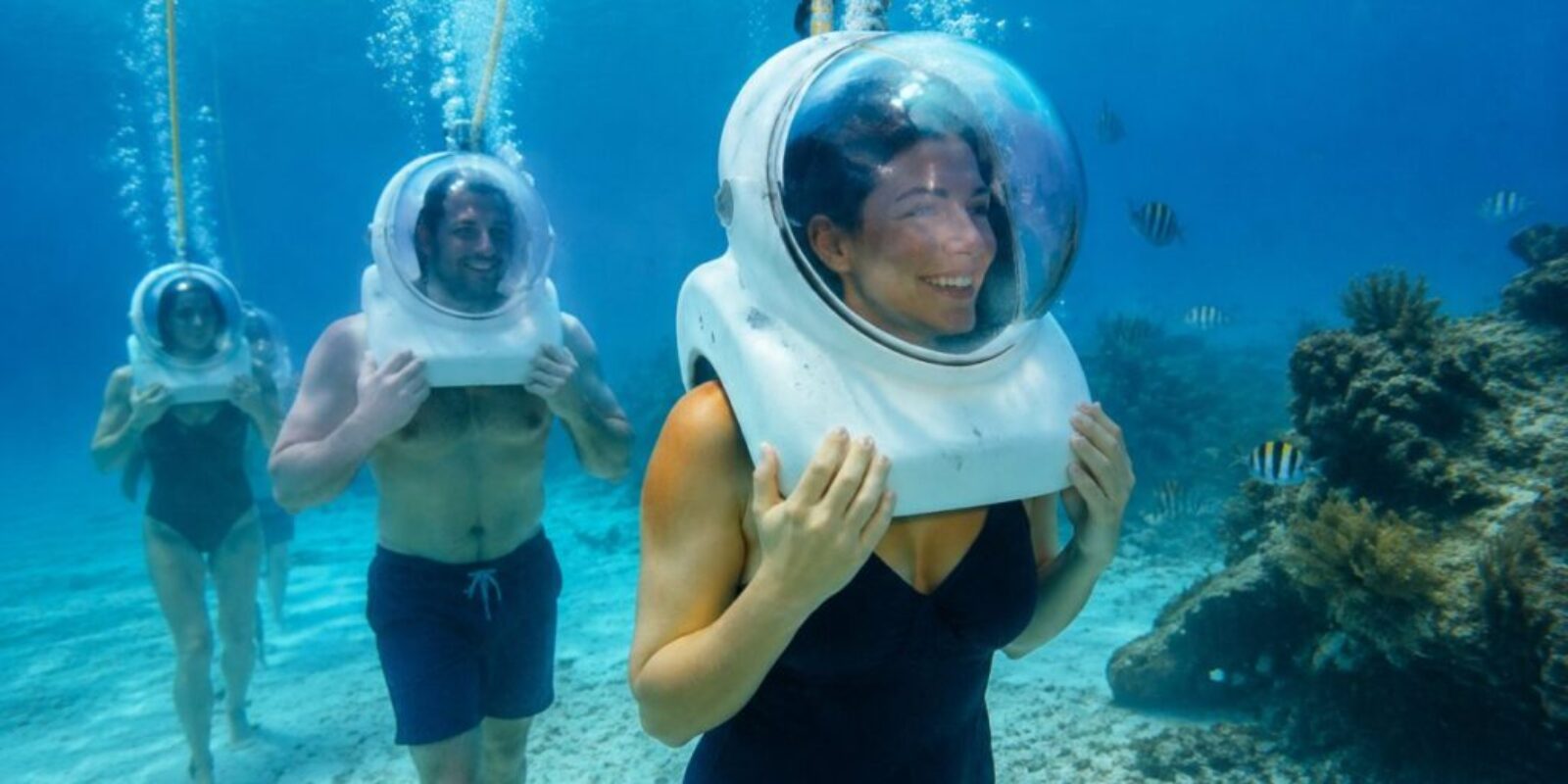
The helmet is the whole trick. It sits over your head and rests on your shoulders, and it is weighted so it stays put and keeps your head upright underwater. Air is pumped down from the surface through a hose, so you never draw from a tank and never run out mid-step.
Three things follow from that design:
- Your face stays dry. Water sits at about chin level inside the helmet. You can look around, smile, and talk.
- You breathe normally. Air flows continuously, in and out, with no mouthpiece to bite down on.
- Your head stays vertical. The helmet’s buoyancy keeps you upright, which is why balance comes quickly.
What the Underwater Experience Feels Like
Picture standing at the bottom of a swimming pool, except the pool has fish in it and the floor is sand. That is the closest honest comparison. The water presses gently on your body, sounds arrive muffled and distant, and your own breathing is the loudest thing you hear.
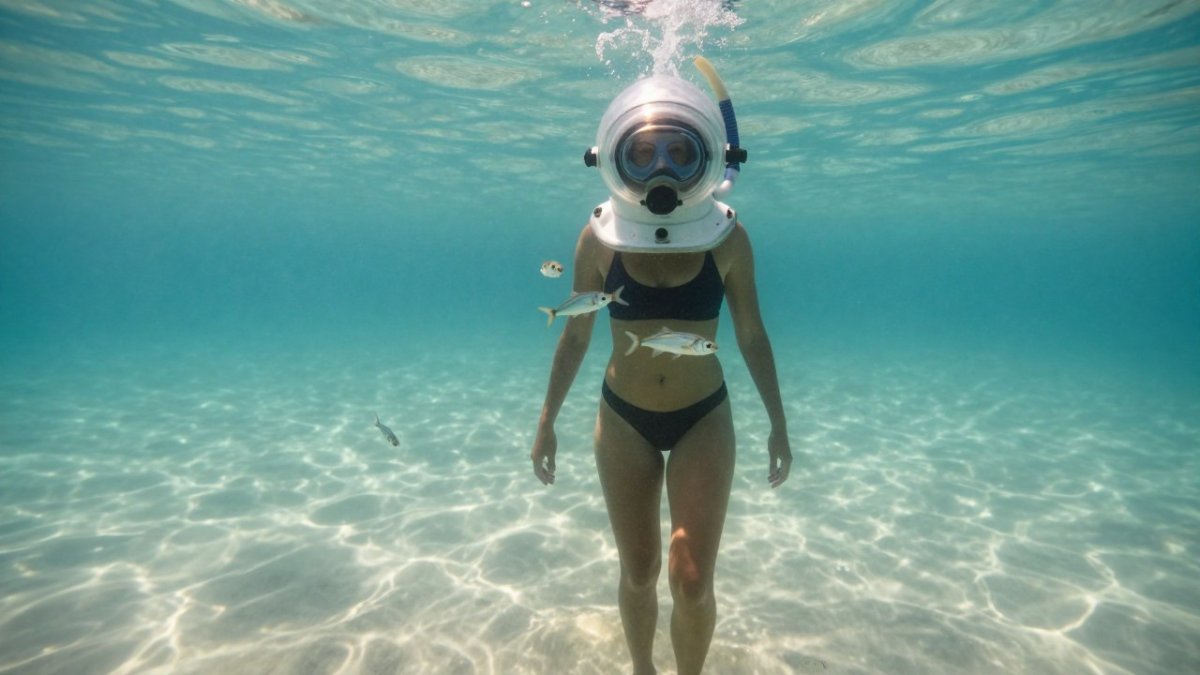
First-timers often find it easy to stay upright, and the nervousness can fade quickly once you reach the bottom. The helmet’s weight on land is noticeable; underwater it settles into something closer to neutral, and you stop thinking about it.
Breathing Naturally and Keeping Your Head Dry
Breathing is the question we hear most, and the answer is genuinely simple: you breathe exactly as you do right now. Air arrives continuously, so there is no rhythm to learn and no mouthpiece to hold. If you have ever felt panicky with a snorkel, this is a different experience entirely, because your nose and mouth are both open to the air.
Keeping your head dry requires one habit: keep your head upright and look forward rather than tilting your face straight down. The helmet’s design does most of the work. If you want the full mechanics, our guide on whether you can breathe normally helmet diving walks through it step by step.
Walking on the Ocean Floor
Walking underwater is slower and softer than walking on land. Your feet sink slightly into sand, each step pushes up a small puff of sediment, and you move at a stable pace along a predetermined path your guide sets. You are not swimming. You are strolling.
Balance comes fast because the helmet keeps your head vertical and your center of gravity predictable. The one adjustment is turning: you rotate your whole body rather than just your head. Guides demonstrate this before you descend, and it takes about three steps to feel natural.
Is Helmet Diving Safe? Safety Procedures and Supervision
Helmet diving is designed to be accessible: you never carry a tank, and the helmet lets you breathe naturally with your head kept dry. Your guide is there to support you throughout the walk.
Hand Signals and Communication
You cannot speak clearly through the helmet, so the guide establishes a small signal set before you enter the water.
Equalizing and What to Do If Your Ears Won’t Clear
The most common discomfort is ear pressure on descent.
Emergency Procedures and Equipment Failure
Ask your operator before booking what their emergency and abort procedures are and how many crew members are on duty during your session.
Anyone with a heart condition, recent surgery, pregnancy, or a respiratory issue should check with a doctor first. Expect a short health questionnaire before you gear up, and there is no pressure to proceed if something doesn’t feel right.
Helmet Diving Depth and Time Underwater
Ask your operator before booking for the depth, bottom time and total session length for your dive, since these vary by site and conditions.
Cost and Booking Considerations
Pricing depends on group size and date. For a quote and details on what is included, contact SEA TREK Cozumel directly or visit our website.
Ask your operator directly about depth and time before booking, since these vary by site and conditions. We’re happy to confirm exactly what your session will look like on the day.
Helmet Diving for Non-Swimmers: Who Can Do It
Non-swimmers can helmet diving without any swimming or floating ability, because you never swim and your head never goes under. You walk in, you walk on the bottom, and you walk back to the ladder. That is the entire physical requirement.
Our experience is designed for ages 8 to 80+, making it a family-friendly activity where multiple generations can take part together.
A few practical notes for anyone worried about physical difficulty:
For a fuller preparation list, read our tips for non-swimmers before helmet diving.
Helmet Diving vs Snorkeling: What’s the Difference
Helmet diving and snorkeling differ mainly in where you are and how you breathe. Snorkeling keeps you at the surface, face down, breathing through a tube. Helmet diving has you walking on the seabed, upright, with your face kept dry.
| Feature | Helmet Diving | Snorkeling |
|---|---|---|
| Position | Standing on the seabed | Floating at the surface |
| Breathing | Continuous air, face dry | Through a mouthpiece tube |
| Swimming required | None | Basic comfort in water |
| Gear | Weighted helmet, surface air hose | Mask, snorkel, fins |
| View | Reef and marine life from below | Reef from above |
| Ear pressure | Equalizing needed on descent | Minimal |
Snorkeling and helmet diving each offer a different experience. Helmet diving gives you the seabed perspective and a dry face, with no mouthpiece. If you’re weighing the two, our beginner comparison of helmet diving and snorkeling breaks down breathing, depth, marine life, safety, and cost side by side.
What to Wear and Bring for Your Helmet Dive
Wear a swimsuit under lightweight clothing and bring a towel, sunscreen, and a dry change of clothes. Leave jewelry and loose items on shore. Equipment is provided on site.
A short checklist before you leave your cabin or hotel:
Book Your Helmet Diving Adventure with SEA TREK Cozumel
The best way to know what helmet diving is like is to stand on the seabed yourself. We’re a locally owned and operated family business, and our experience is a top-rated family activity on the island.
When you book with us, here’s what you get:
- No swimming or scuba certification required, so everyone in your group can join.
- All equipment provided on site, including the helmet.
- Free entrance to Jeanie’s Beach Club, so your day continues after the walk.
- Convenient access near the cruise ports, which keeps your shore time simple.
Pricing depends on your group size and date, so check our current helmet diving price comparison or head to walk on the ocean floor in Cozumel to see the full experience and reserve your spot.
The gap between wondering what it feels like and knowing is one short ladder step. We’ll have your helmet ready, your air flowing, and a guide beside you the whole way. Get started with SEA TREK Cozumel and trade the surface view for a walk on the ocean floor.
Frequently Asked Questions
Is helmet diving worth it?
For travelers who want to explore the ocean floor without swimming skills or scuba certification, helmet diving offers a rare combination of accessibility and immersion. You breathe naturally, keep your head dry, and walk among marine life at a relaxed pace. The guided format and small group sizes make it especially good for families and first-timers. Whether it’s worth it depends on your comfort with water and desire for a unique underwater experience, but it offers a different way to see the reef than surface snorkeling.
Can you helmet dive if you cannot swim?
Yes. Helmet diving requires no swimming ability because you walk on the ocean floor and your head stays dry inside the helmet. You breathe normally through the air supply, and a guide accompanies you the entire time. Non-swimmers often find it less intimidating than snorkeling because there is no need to float or tread water. Just be honest about your comfort level during the briefing so the crew can support you.
How deep is helmet diving?
Depth varies by operator, site and conditions, so ask SEA TREK Cozumel for the depth of your session before you book.
What does helmet diving feel like?
Most people describe it as surprisingly calm and quiet. You walk upright on the seabed with your head dry, breathing normally through the helmet’s air supply. The helmet adds some weight on land but feels lighter underwater. You may notice the sound of your own breathing and the gentle movement of water around you.