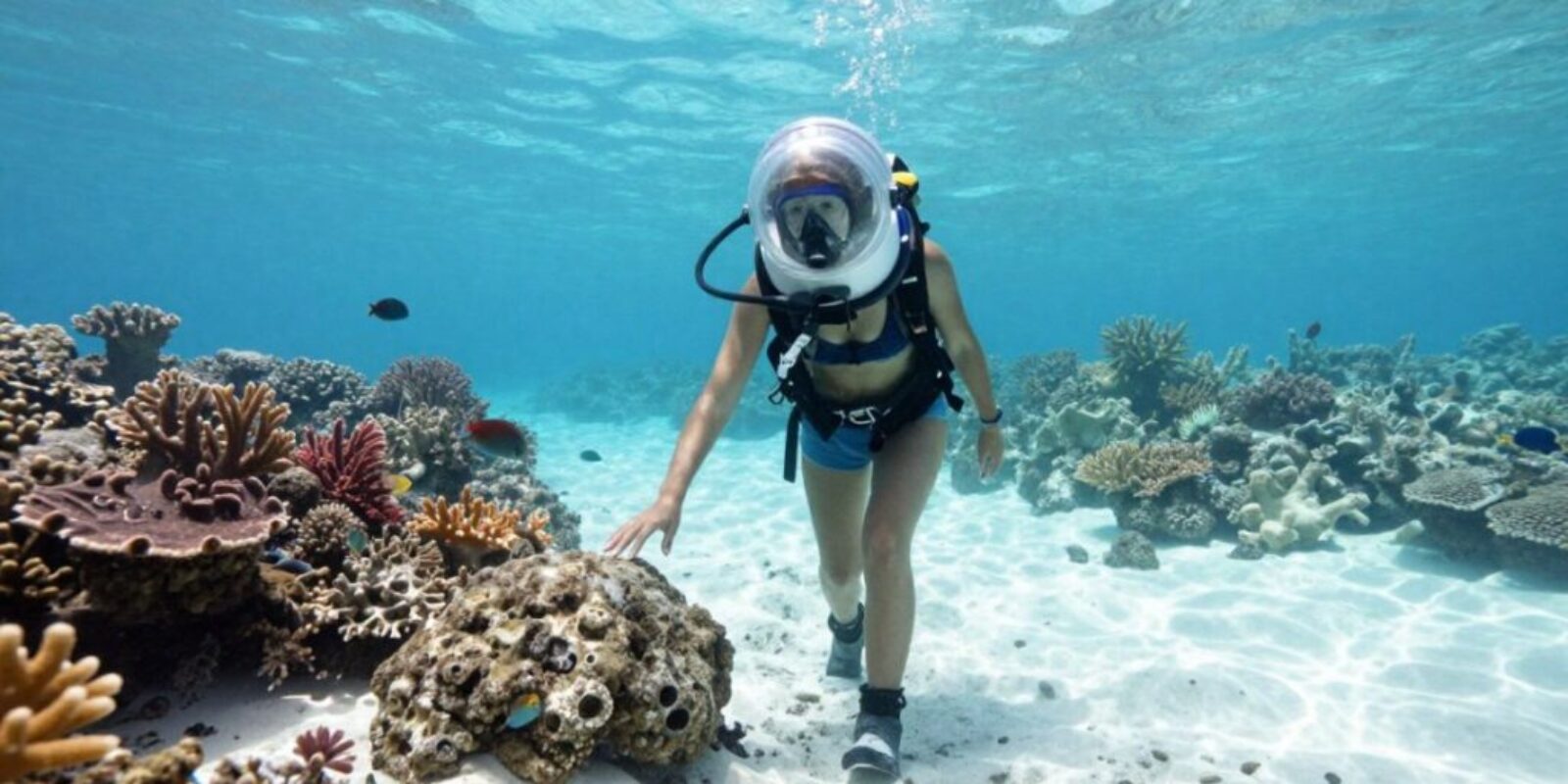
Last Updated: November 10, 2026
Quick Summary
The easiest underwater adventures in Mexico for non-swimmers are helmet diving in Cozumel, where you walk the seafloor and breathe normally without any swimming, plus shallow reef snorkeling with a fitted vest and a guide who keeps you close to shore. Both suit beginners, and helmet diving welcomes ages 8 to 80+.
- Helmet diving requires zero swimming ability because you walk on the seafloor and breathe normally through a helmet.
- Shallow reef snorkeling works for non-swimmers who stay in calm water, wear a fitted vest, and go with a guide.
- Akumal’s seagrass beds draw green sea turtles into shallow water for a beginner-friendly wildlife encounter.
- Whale shark tours demand more water confidence since you jump from a boat into open water.
- SEA TREK Cozumel sits near all major cruise ports and includes free entrance to Jeanie’s Beach Club.
Nervous about the water? Start here.Walk the seafloor in Cozumel with no swimming or scuba skills needed, ages 8 to 80+.
Table of Contents
- What Makes an Underwater Adventure Easy for Beginners
- 1. Underwater Helmet Diving in Cozumel: Walk the Seafloor Without Swimming
- 2. Can You Snorkel If You Can’t Swim? Shallow Reef Snorkeling in Cozumel and the Riviera Maya
- 3. Swimming with Sea Turtles in Akumal: A Beginner-Friendly Wildlife Encounter
- 4. Cenote Swimming and Underground River Exploration in the Yucatán
- 5. Whale Shark Encounters and Other Marine Wildlife Trips for Non-Divers
- Easy Underwater Adventures in Mexico Reviews: What Travelers Actually Say
- Easy Underwater Adventures in Mexico Map: Planning Your Route and Logistics
- Frequently Asked Questions
What Makes an Underwater Adventure Easy for Beginners
Not every ocean experience requires you to swim. That single fact opens up the Caribbean coast to travelers who never thought they could explore a reef. At SEA TREK Cozumel, our helmet diving experience lets grandparents and eight-year-olds walk the seafloor without swimming skills or scuba certification.
So what separates an easy underwater adventure from a demanding one? Three things decide it: swimming ability, water depth, and gear. Get all three right and almost anyone can participate. But “easy” is not the same as “no rules.” The sections below translate those three factors into the practical questions beginners actually ask: Do I need to swim? Is there a minimum age? What if I have a health condition? What gear is provided, and what does it cost?
Swimming Ability, Depth, and Gear: The Three Factors That Matter
An easy underwater adventure is one where the gear does the work instead of your arms and legs. When you don’t need to tread water, hold your breath, or kick against a current, the experience becomes about looking around rather than staying afloat.
Depth matters just as much. Shallow water near shore feels safe to a nervous first-timer; deep open water does not. And gear decides how much effort you expend before you ever get wet.
Here’s how these experiences compare on those three factors:
| Experience | Swimming Needed | Typical Depth | Gear Effort | Minimum Age (typical) | Life Jacket | Best For |
|---|---|---|---|---|---|---|
| Helmet diving | None | Walkable seafloor | Operator-managed | 8+ | Provided | Non-swimmers, families |
| Shallow reef snorkeling | Basic comfort | Surface level | Light | Varies by operator | Provided | Cautious beginners |
| Sea turtle snorkeling | Basic comfort | Shallow | Light | Varies by operator | Provided | Wildlife lovers |
| Cenote swimming | Moderate | Variable | None | Varies by site | Often required | Confident swimmers |
| Whale shark trips | Moderate to strong | Surface | Light | Usually 8+ | Required | Strong swimmers |
Do You Need to Swim? Honest Answers by Activity
Helmet diving requires zero swimming ability. You walk on the seafloor and breathe normally through a helmet.
Safety, Age, and Health: What to Confirm Before You Book
Our helmet diving experience is designed for ages 8 to 80+. Please check with your doctor if you have any health concerns before booking.
For travelers with mobility limitations, helmet diving avoids swimming entirely. Confirm any access needs with the team before booking.
Costs and What’s Included
Pricing depends on the tour, date, and what is included. For current prices or a quote, please visit the SEA TREK Cozumel website.
If you want the full breakdown of safety rules and what to expect, our non swimmers helmet diving guide covers it step by step.
How We Ranked These Seven Experiences
We ranked each adventure by beginner-friendliness first, then by how much prior water experience it demands, and finally by how easy it is to reach from a cruise port or resort. A stunning reef that requires a certification card ranks lower than a modest one anyone can enjoy. For a wider ranked list of options across the island, see our best underwater activities in Cozumel roundup.
1. Underwater Helmet Diving in Cozumel: Walk the Seafloor Without Swimming
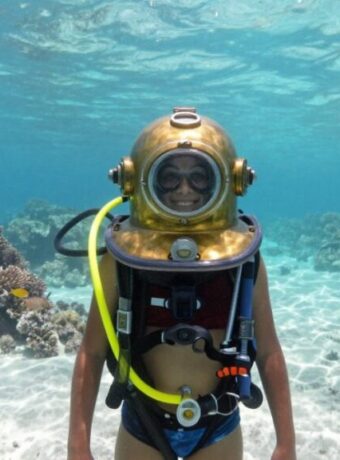
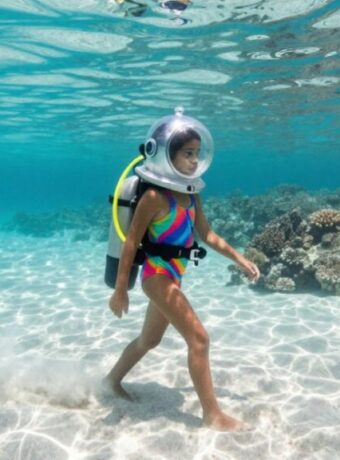
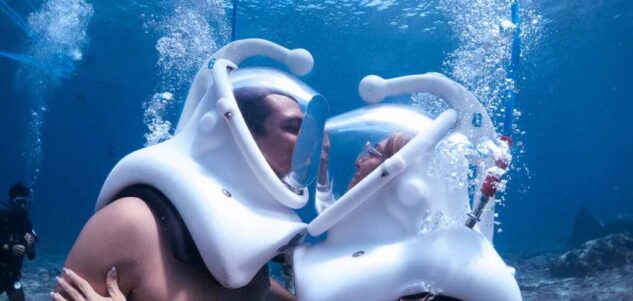
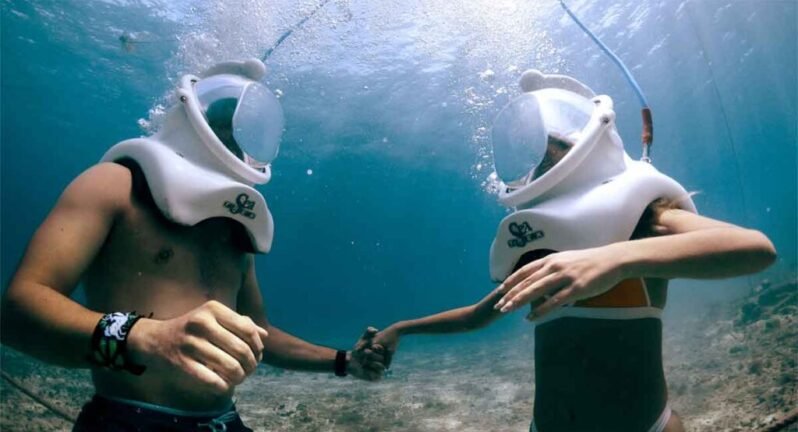
Our top pick is underwater helmet diving in Cozumel, because it removes every barrier that keeps non-swimmers on the beach. You descend a ladder, a helmet settles over your head, and you breathe normally while walking across the sand. No mask to clear, no regulator to bite, no swimming motion at all.
What the Helmet Dive Feels Like and Who It Suits
Picture standing chest-deep, then stepping down a few rungs until your feet touch bottom. Air flows freely. Your glasses stay on if they fit inside the helmet. Fish drift past at eye level.
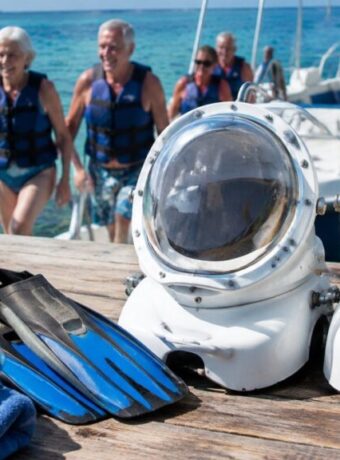
This is the one activity on the list built for ages 8 to 80+, and it’s why we run it. Families with a nervous nine-year-old and a grandmother in her seventies can do the same dive on the same trip. Equipment is provided on site, and the tour includes entrance to Jeanie’s Beach Club. For the mechanics of how walking underwater actually works, read our underwater walking guide.
2. Can You Snorkel If You Can’t Swim? Shallow Reef Snorkeling in Cozumel and the Riviera Maya
Yes, you can snorkel without swimming, provided you stay in shallow water, wear a properly fitted vest, and go with a guide who keeps you close to shore. Snorkeling is floating face-down with a tube, not swimming laps. Many beginners manage it fine in calm, waist-deep reef areas.
The catch is confidence. A non-swimmer who panics at depth will struggle, and currents vary by day. Choose a guided shore-entry tour over a boat drop, and tell your guide upfront that you don’t swim. Comparing your options? Our helmet diving vs snorkeling breakdown lays out the trade-offs for beginners.
3. Swimming with Sea Turtles in Akumal: A Beginner-Friendly Wildlife Encounter
Akumal’s seagrass beds draw green sea turtles into shallow water, which makes this one of the more accessible marine wildlife encounters on the coast. You float at the surface while turtles graze below. It suits travelers comfortable in the water but not certified divers.
Respect matters here. Keep distance, never touch or chase a turtle, and follow your guide’s positioning. Operators run guided snorkeling trips to Akumal that include photos, which helps if you’d rather watch than fumble with a camera.
4. Cenote Swimming and Underground River Exploration in the Yucatán
Cenotes offer freshwater swimming in collapsed limestone caverns, and the Yucatán peninsula holds thousands of them. The easiest ones have walk-in entries, shallow platforms, and life jackets on hand. Underground river tours in the Riviera Maya often suit families, though some routes involve darkness and tight passages.
Be honest about your comfort level. Cenote swimming is refreshing and visually striking, but it is not a substitute for a guided ocean walk. If you can’t swim, stick to cenotes with guided groups, mandatory vests, and shallow entries.
5. Whale Shark Encounters and Other Marine Wildlife Trips for Non-Divers
Whale shark season runs roughly from late spring through summer off the region’s coast, and tours let snorkelers glimpse these enormous filter-feeders at the surface. It’s spectacular, but it demands more water confidence than a reef float: you jump from a boat into open water and swim briefly alongside the animal.
Non-divers can also book SNUBA excursions, which keep you tethered to a surface raft, or glass-bottom and wildlife-spotting boat tours. These are gentler introductions to marine wildlife for travelers who want to stay dry or close to the surface.
Easy Underwater Adventures in Mexico Reviews: What Travelers Actually Say
The pattern in traveler feedback is consistent: the experiences people rate highest are the ones where they felt safe and never rushed. Nervous first-timers praise guides who stayed close and explained every step. Families repeatedly mention that a single activity worked for every age group.
The complaints cluster around the same issues, too. Rough seas, unclear meeting points, and tours that move too fast for beginners. Read reviews looking for words like “patient guide,” “calm water,” and “great for my parents.” When you’re ready to book, you can walk on the ocean floor in Cozumel directly with an operator who specializes in first-timers.
Easy Underwater Adventures in Mexico Map: Planning Your Route and Logistics
SEA TREK Cozumel is conveniently located near all major cruise ports, and it welcomes cruise passengers and visitors staying in the Riviera Maya or Cancun.
The hardest part of an underwater adventure isn’t the water. It’s deciding to try. If swimming ability has kept you on the sand, we’d rather you see the reef than watch it from a boat. SEA TREK Cozumel provides all equipment on site. Our tours suit ages 8 to 80+, need no certification, and include free entrance to Jeanie’s Beach Club. Get started with SEA TREK Cozumel and walk the ocean floor on your next visit.
Frequently Asked Questions
Can you snorkel if you can’t swim?
SEA TREK Cozumel’s underwater helmet diving is a fully supported option where you walk on the seafloor and breathe naturally without any swimming at all, with no swimming skills or scuba certification needed.
Is underwater helmet diving in Cozumel suitable for children and older adults?
SEA TREK Cozumel designs its helmet diving experience for ages 8 to 80+, making it one of the few underwater adventures that genuinely works for multi-generational families. Participants walk on the ocean floor at shallow depths and breathe normally inside the helmet, so no swimming ability or scuba certification is needed. It is a good option for grandparents and kids to share the same activity rather than splitting up.
How deep do underwater helmet walks go, and is it safe for non-swimmers?
Helmet diving is a guided walk on the ocean floor. You breathe naturally through the helmet, and non-swimmers can participate because you are walking, not swimming. This makes it an accessible underwater adventure for anyone anxious about water.
What should you bring on an easy underwater adventure in Mexico?
Bring a swimsuit, a towel, and a change of clothes. All equipment is provided on site, so you do not need to buy anything special. Our helmet diving tour includes free entrance to Jeanie’s Beach Club.
How do you choose among easy underwater adventures in Mexico for a family with mixed abilities?
Start by considering your least confident swimmer. SEA TREK Cozumel’s helmet diving works for ages 8 to 80+ and requires no swimming skills or scuba certification, making it a good fit for mixed-ability families. Confirm any health restrictions with the team before booking.