Quick Summary
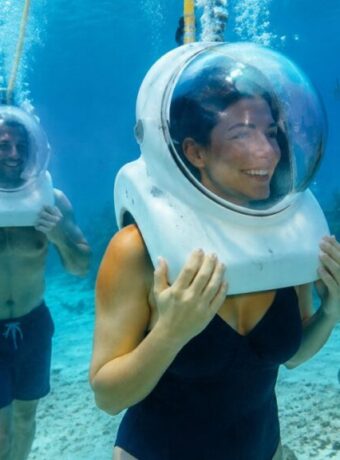
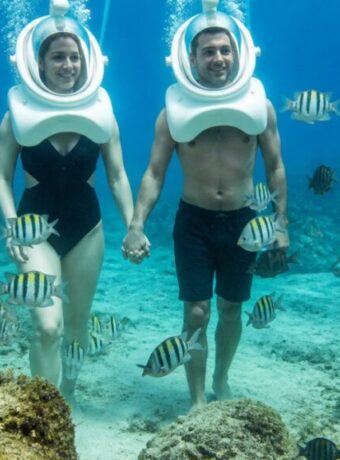
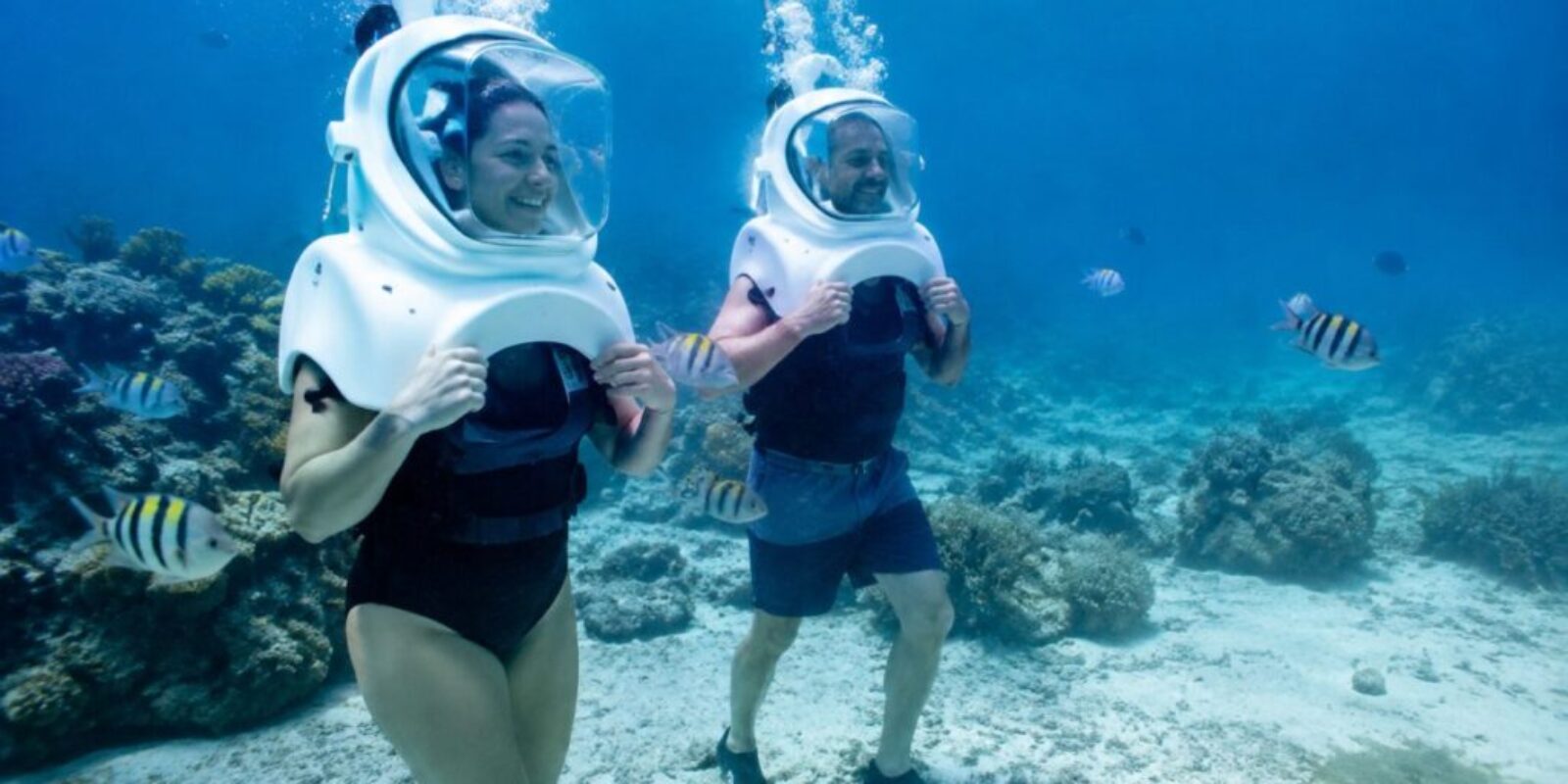
Underwater walking lets you move along the sand and past coral reefs while breathing normally inside a large clear helmet that receives air through a hose from the surface. You do not need to swim, float or hold your breath, and the guide does the navigating.
- The helmet receives continuous air from the surface, so there is no regulator or tank to manage.
- Underwater walking requires no certification, unlike scuba diving, which typically does.
- Non-swimmers should check ears, sinuses, heart and lung conditions, and medications before booking.
- Try swallowing and yawning on land; ear pain or blockage means the walk is better postponed.
- Agree on the stop signal with your guide before entering the water and give it early if panic builds.
Table of Contents
- How to Walk Underwater Without Swimming Skills
- What Underwater Walking Is and How It Differs From Scuba Diving
- Sea Trek Helmet Diving: How the Equipment Lets You Breathe Naturally
- Helmet Diving Safety Requirements for Non-Swimmers
- Underwater Walking Age Limits and Who Can Join
- Managing Fear and Panic Underwater as a Beginner
- Booking Your Underwater Walk on a Cruise Port Day
- Frequently Asked Questions
How to Walk Underwater Without Swimming Skills
Last Updated: November 4, 2026
Walking on the ocean floor without knowing how to swim sounds impossible, but Underwater walking, sometimes called sea walking, lets you move along the sand and past coral reefs while breathing normally inside a large clear helmet. There is no need to swim, float or hold your breath. This guide explains how underwater walking works, who can take part, and how to plan it around a cruise port day.
What Underwater Walking Is and How It Differs From Scuba Diving
Underwater walking is a shallow-water activity in which you wear a lightweight helmet that receives air through a hose from the surface. Your feet stay on the bottom, and a guide walks alongside you. The helmet, not your lungs or your swimming ability, keeps you connected to the air supply.
Scuba diving is a different activity. Scuba divers carry their own tanks, must learn breathing techniques and buoyancy control, and usually need a certification from a training agency before they go below the surface.
Sea walk vs. scuba: side-by-side comparison
| Factor | Underwater walking (sea walk) | Scuba diving |
|---|---|---|
| Swimming ability needed | None | Recommended, usually required |
| Certification | Not required | Typically required |
| Breathing method | Helmet with surface air hose | Regulator on a carried tank |
| Who leads | Trained guide | Certified dive buddy or instructor |
| Best for | Non-swimmers, families, first-timers | Certified divers wanting depth and freedom |
Sea Trek Helmet Diving: How the Equipment Lets You Breathe Naturally
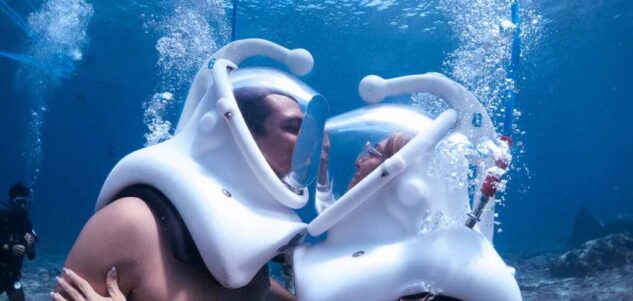
The helmet is built so you can breathe the way you do on land. Learn how breathing works in helmet diving step by step. Air flows continuously from the surface, so you do not need to coordinate inhaling and exhaling with a regulator. You can talk with your guide and fellow walkers.
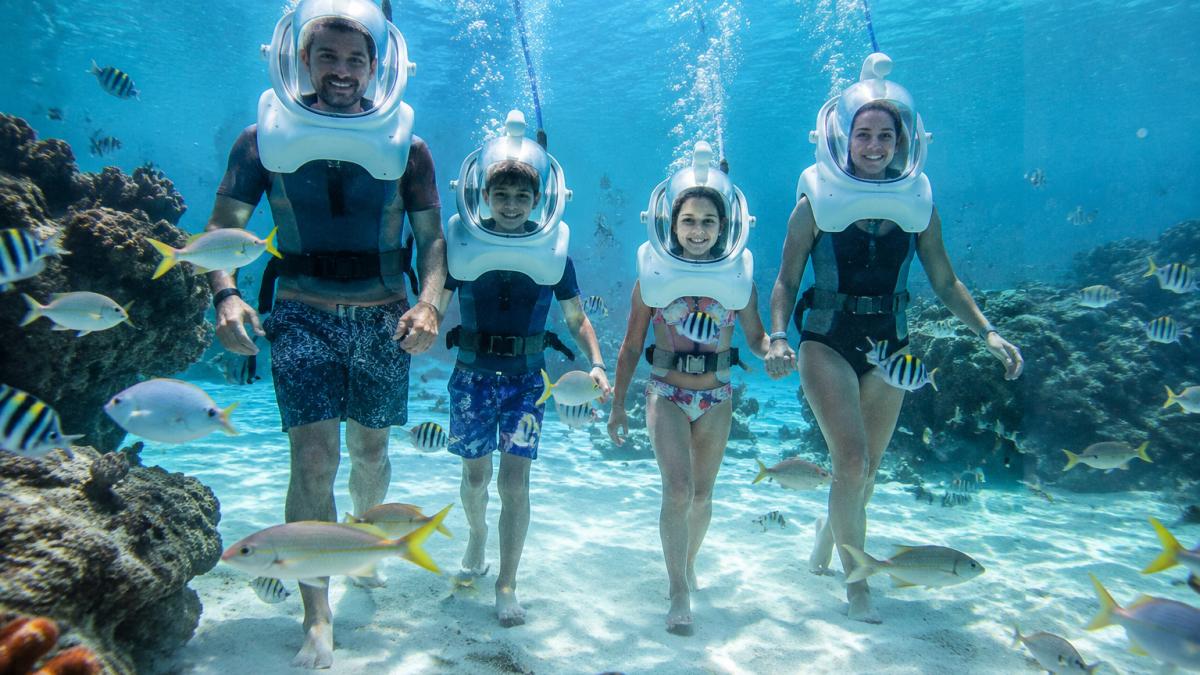
Because the air supply is constant, there is no mouthpiece to clear and no tank to manage. The helmet sits on your shoulders, and the weight is supported so you can stand and walk without carrying the load on your back.
The role of the buoyancy control device
Many people are told they need a buoyancy control device, or BCD, to dive safely. In helmet diving, the flotation the helmet system provides takes the place of the BCD you would wear for scuba. The guide keeps you grounded on the sand, so you are not left trying to control your depth or position yourself in the water column. This is one of the main reasons the activity suits people who have never learned buoyancy techniques.
Helmet Diving Safety Requirements for Non-Swimmers
Non-swimmers can take part, but the activity still has safety requirements. Staff check your suitability before you enter the water, and the walk takes place in shallow water with a guide at your side. Our non-swimmer safety checklist covers what to review before you go under. The difference between a smooth walk and a stressful one usually comes down to how honestly you assess yourself before you board.
A non-swimmer readiness checklist
Most operators follow a similar screening pattern. Use this checklist to decide whether you are ready on the day of your walk:
- Ears and sinuses: If you have a cold, sinus congestion, or an active ear infection, the pressure change in the helmet may cause discomfort. Equalization is usually easier in helmet diving than in scuba because you are not descending steeply, but congestion still makes it harder. Reschedule if your ears feel full on land.
- Heart and lung conditions: Tell staff about any heart condition, asthma, COPD, or recent respiratory illness. Ask staff about their clearance requirements for these conditions before booking.
- Medications: Mention anything that affects balance, breathing, or alertness, including sedatives, strong antihistamines, and some blood pressure medications. A common pattern is for guests to skip this detail because they take the medication daily; staff still need to know.
- Pregnancy: Confirm the current policy on pregnant guests when you book.
- Mobility and balance: You will walk on uneven sand and climb a ladder into and out of the water. If you use a cane or walker on land, ask about assistance before booking.
- Panic history: If you have had a panic attack in water before, tell the guide. They can keep you closer during the walk and adjust the pace.
Physiological checks before you go under
Before you enter the water, run through a few physical checks. If you have ear problems, sinus congestion, or a cold, the pressure changes in your ears may be uncomfortable, so mention them when you check in.
A practical test many guides suggest: swallow and yawn a few times on land. If either action produces pain or a blocked feeling in your ears, your Eustachian tubes are congested and the walk is better postponed.
Supervision and instructor-to-student ratios
Helmet diving is a guided activity, not a solo one. Ask when you book how many guests are assigned to each guide, since group size affects how much individual attention you receive. The guide stays within arm’s reach and watches for signs of discomfort, but you should also be honest about how you feel from the start.
Emergency procedures for beginners
Ask the guide to walk you through the stop signal before you enter the water. Ask the guide to explain the stop signal used on your walk.
A common mistake is assuming that because you are standing on the bottom, nothing can go wrong. Staff are trained to watch for signs of discomfort, but the most reliable safety system is a guest who speaks up early rather than waiting until panic sets in.
Underwater Walking Age Limits and Who Can Join
Helmet diving is designed for a wide age range, so families with children and grandparents can often take part together. See how non-swimmers fare on Cozumel shore excursions. Age and health requirements can change, so confirm the current rules with SEA TREK Cozumel when you book.
This flexibility is one reason multi-generational groups choose the activity. A grandparent who has not been in the ocean in years and a child who has never swum can walk side by side, with the same guide and the same view of the reef.
Managing Fear and Panic Underwater as a Beginner
Fear is normal the first time you go underwater, especially if you cannot swim. The helmet takes away the need to swim, but it does not remove the feeling of being under the surface. Most beginners find the anxiety fades once they start breathing normally and walking. The techniques below are the ones guides most often teach, and they work because they give you something concrete to do instead of something to worry about.
Before you enter the water
- Watch the briefing, not the water. Pay attention to the guide’s demonstration of the stop signal and the hand signals for “okay” and “up.” Knowing exactly what to do if something feels wrong removes a large share of pre-entry anxiety.
- Name the fear out loud. Tell the guide, “I’m nervous about my ears” or “I’ve never been under water before.” Guides hear this daily, and they will keep you closer and check on you more often.
- Practice the breathing pattern on land. Breathe in through your nose for a count of four, out through your nose for a count of six. Repeat it while you wait. The pattern feels familiar by the time you are under the helmet.
- Skip the coffee and the heavy meal. Caffeine and a full stomach both amplify the physical sensations of anxiety, such as a racing heart. A light meal an hour or two before is a common recommendation.
In the water: panic-management techniques
- Breathe slowly and steadily through your nose, the same way you would on land. The helmet delivers a continuous air supply, so you do not need to coordinate with a regulator. If you feel short of breath, slow the exhale rather than trying to take a bigger inhale.
- Keep your eyes on your guide rather than on the open water. A fixed point of reference reduces the disorientation that triggers panic.
- Hold the guide’s hand or stay close to them. Physical contact is one of the fastest ways to interrupt a rising panic response.
- Use a grounding sequence. Name five things you can see, four you can touch, three you can hear. This is a standard anxiety technique, and it works underwater because it pulls your attention away from the sensation of being submerged.
- Signal early. If you feel panic building, give the stop signal. The walk can be paused or ended, and most guides would rather bring you up early than manage a guest who waited too long.
The most common panic trigger
Watch out: the most common panic trigger is looking down at the sand and fish and losing track of where you are. The sudden sense of depth and movement can feel like falling. Keeping your gaze forward and close to your guide prevents most of these moments. If you do look down, pause, plant both feet, and reorient before you keep walking.
After the walk
If you felt panicky, tell the guide afterward what triggered it. That feedback helps them adjust for the next guest, and it gives you a clearer picture of whether a second walk would feel easier.
Booking Your Underwater Walk on a Cruise Port Day
Cruise passengers usually have a few hours ashore, so plan the timing early. Check your ship’s all-aboard time, arrange your transfer to the SEA TREK location, and allow time for check-in and the briefing before the walk. Follow our guide to booking Cozumel port excursions step by step.
Plan for the full visit rather than only the walk itself. Arriving early gives you time to get settled before the walk. If you have questions about how long the activity takes or whether it fits your port schedule, contact SEA TREK Cozumel before you sail.
Frequently Asked Questions
What is underwater walking called?
Underwater walking is most often called helmet diving or sea walking. Participants wear a large, open-bottomed helmet that supplies air from the surface through a hose, so they can breathe normally while walking on the seabed. Because no scuba tank is involved and no swimming is required, it differs from scuba diving. Guided tours usually keep groups together along a sandy, shallow stretch of reef. Operators such as SEA TREK Cozumel supply all equipment on site, so guests only need to bring a swimsuit, sunscreen, and a willingness to explore.
What is the age limit for sea walking?
Sea walking is designed to be accessible across a wide age range. SEA TREK Cozumel accepts guests from about age 8 through adults in their 80s and beyond. Children should be accompanied by an adult. Guests with health conditions such as heart or respiratory problems should consult a physician before booking. Anyone unsure whether they qualify can contact the operator directly before the tour date.
Do you need to be a strong swimmer to try helmet diving?
No swimming ability is required for helmet diving. The helmet is weighted so the participant stays on the sea floor, and a trained guide holds the guest’s hand or keeps close contact throughout the walk. Participants walk rather than swim, and the air supply lets them breathe normally. Non-swimmers are welcome to take part. Guests who feel uneasy can tell the guide at any point.
Is it safe to walk on the ocean floor without swimming skills?
Helmet diving is designed to be accessible to non-swimmers, and the air supply is continuous. Choosing an operator with a clear safety briefing and visible staff ratios is the most practical way to judge quality before booking.
Our team at SEA TREK Cozumel built this experience so that anyone who can walk can walk on the ocean floor, from young children to guests in their 80s. Visit the SEA TREK Cozumel website to check availability, confirm current age and health guidelines, and reserve your underwater walk.